

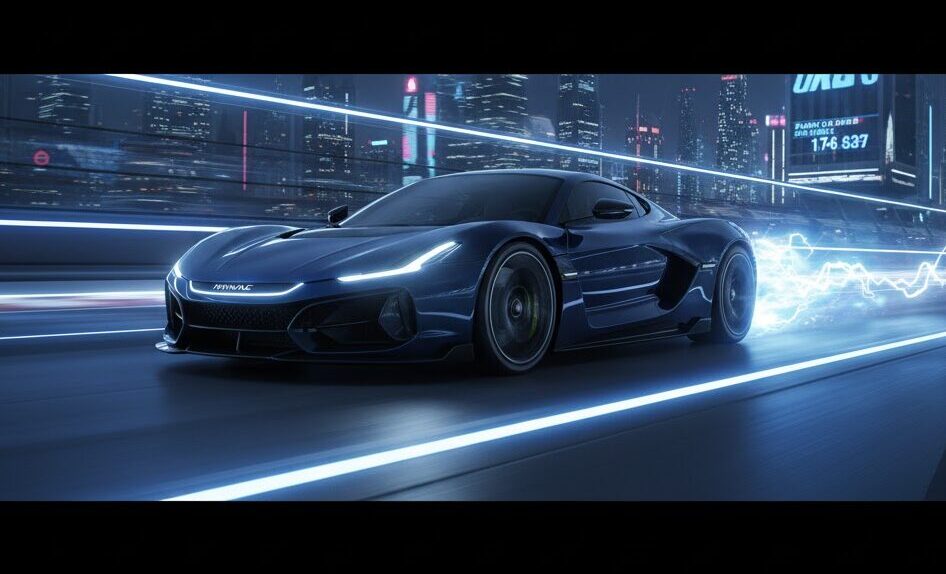
In the ever-evolving world of electric vehicles, speed has become more than just a number—it’s a symbol of innovation, precision, and limitless potential. Among all the electric supercars 2025 has to offer, one name stands at the top of the performance hierarchy: Rimac Nevera.
Engineered in Croatia by Rimac Automobili, the Nevera has redefined what’s possible for electric car performance, setting records that rival (and surpass) legendary gas-powered supercars. But how did this EV achieve the title of the fastest electric car in the world? Let’s break down the engineering brilliance, innovation, and technology that made it happen.
The Birth of a New Kind of Supercar
Rimac Automobili, founded by visionary engineer Mate Rimac, began with a bold mission—to prove that electric power could outperform the internal combustion engine. The result of that ambition is the Rimac Nevera, a masterpiece of fastest electric car innovation that blends cutting-edge engineering with breathtaking design.
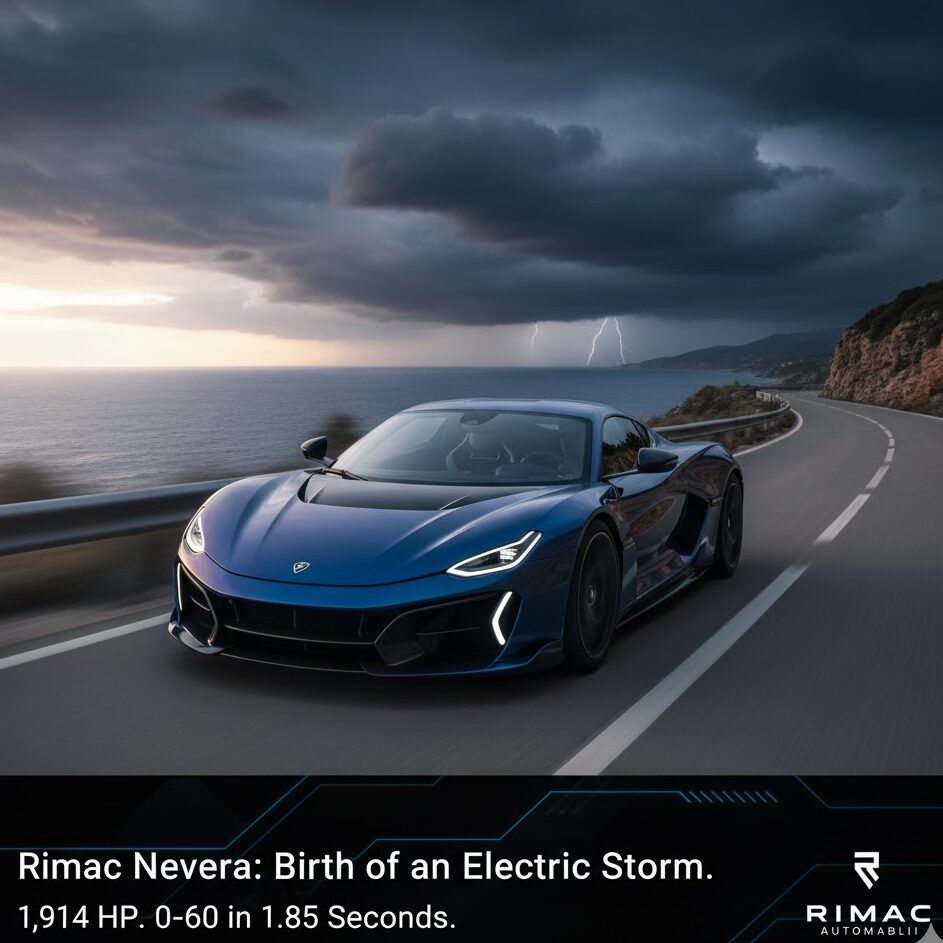
Named after a sudden Mediterranean storm, the Nevera lives up to its name: fast, powerful, and unpredictable. It’s not just another EV; it’s a showcase of how far EV performance technology has evolved in just a few short years.
Unrivaled Speed and Acceleration
The Nevera isn’t just fast—it’s blisteringly fast. Equipped with four independent electric motors (one for each wheel), the car delivers a combined 1,914 horsepower and 2,360 Nm of torque. These numbers are more than just impressive—they’re game-changing.
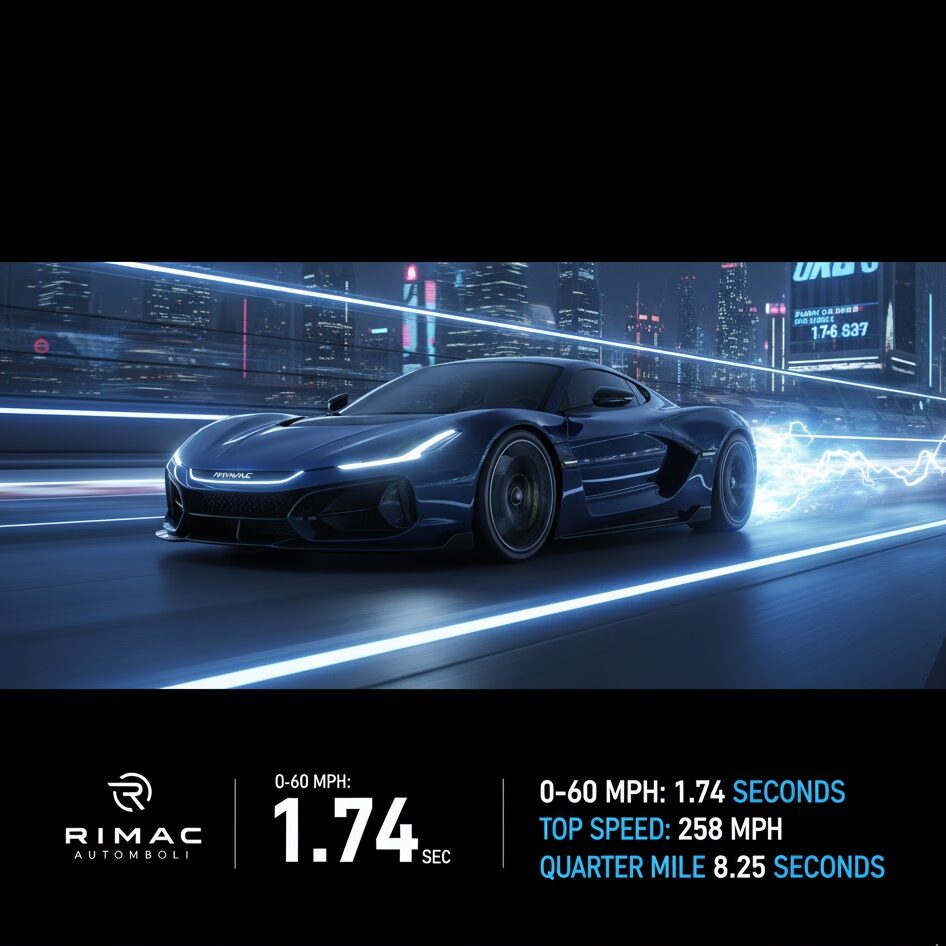
- 0–60 mph (0–100 km/h): 1.74 seconds
- Top speed: 258 mph (412 km/h)
- Quarter mile: 8.25 seconds (record-breaking)
These stats make the Rimac Nevera not only the fastest electric car ever built but one of the fastest cars—period. It leaves behind nearly every combustion-engine hypercar, proving that the future of speed belongs to electric propulsion.
Engineering Excellence: The Technology Behind the Speed
What sets the Nevera apart isn’t just raw power—it’s the electric car performance precision achieved through advanced engineering. Let’s explore the core technologies that make this possible.
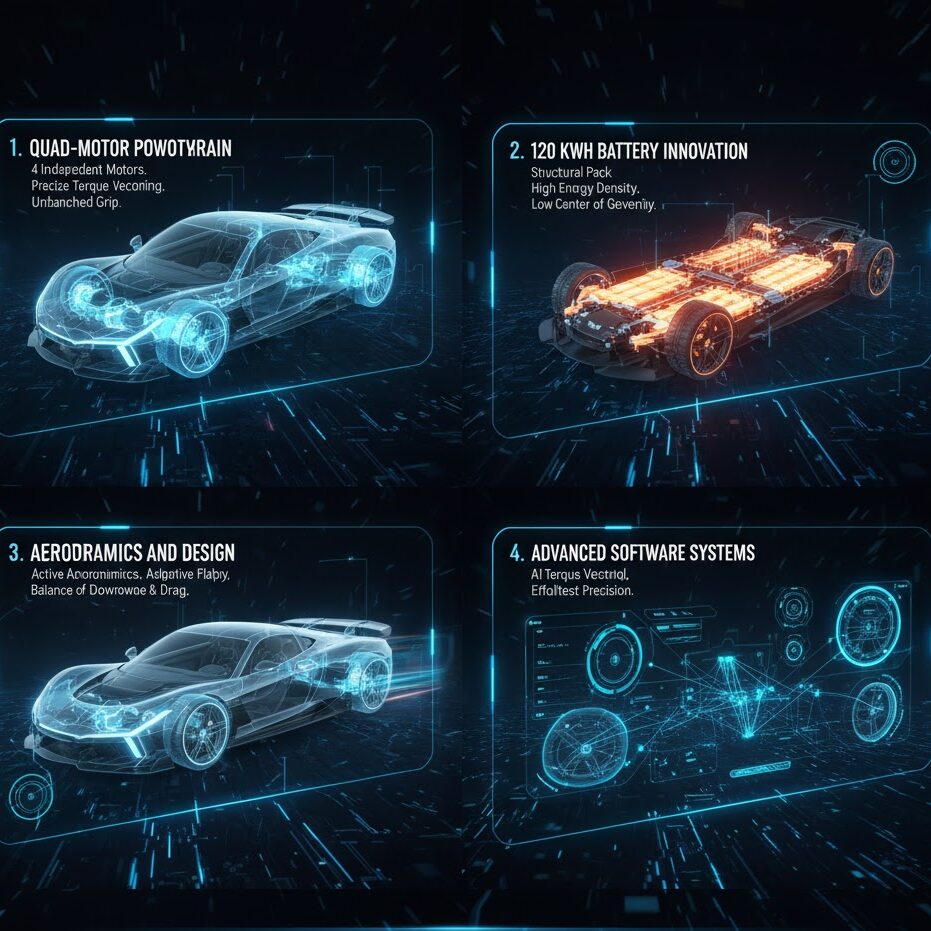
1. Quad-Motor Powertrain
Each wheel of the Rimac Nevera has its own dedicated motor, allowing precise control of torque distribution in real-time. This system eliminates mechanical differentials, making handling razor-sharp and ensuring unmatched grip even at extreme speeds.
2. 120 kWh Battery Innovation
The Nevera’s custom lithium-manganese-nickel battery pack provides incredible energy density and thermal stability. It’s integrated into the car’s carbon-fiber monocoque structure, which not only improves rigidity but also lowers the center of gravity—key for agile handling.
3. Aerodynamics and Design
The Nevera’s sleek body isn’t just for show. Active aerodynamics—including adjustable flaps, diffusers, and spoilers—adapt to driving conditions, balancing downforce and drag. This allows the car to remain stable whether it’s cruising highways or breaking speed records.
4. Advanced Software Systems
At the heart of the Nevera’s EV performance technology lies its software. Rimac’s proprietary algorithms control torque vectoring, regenerative braking, and stability in microseconds. This digital intelligence makes the Nevera feel both effortless and precise, no matter how extreme the speed.
Electric Car Innovation Beyond Power
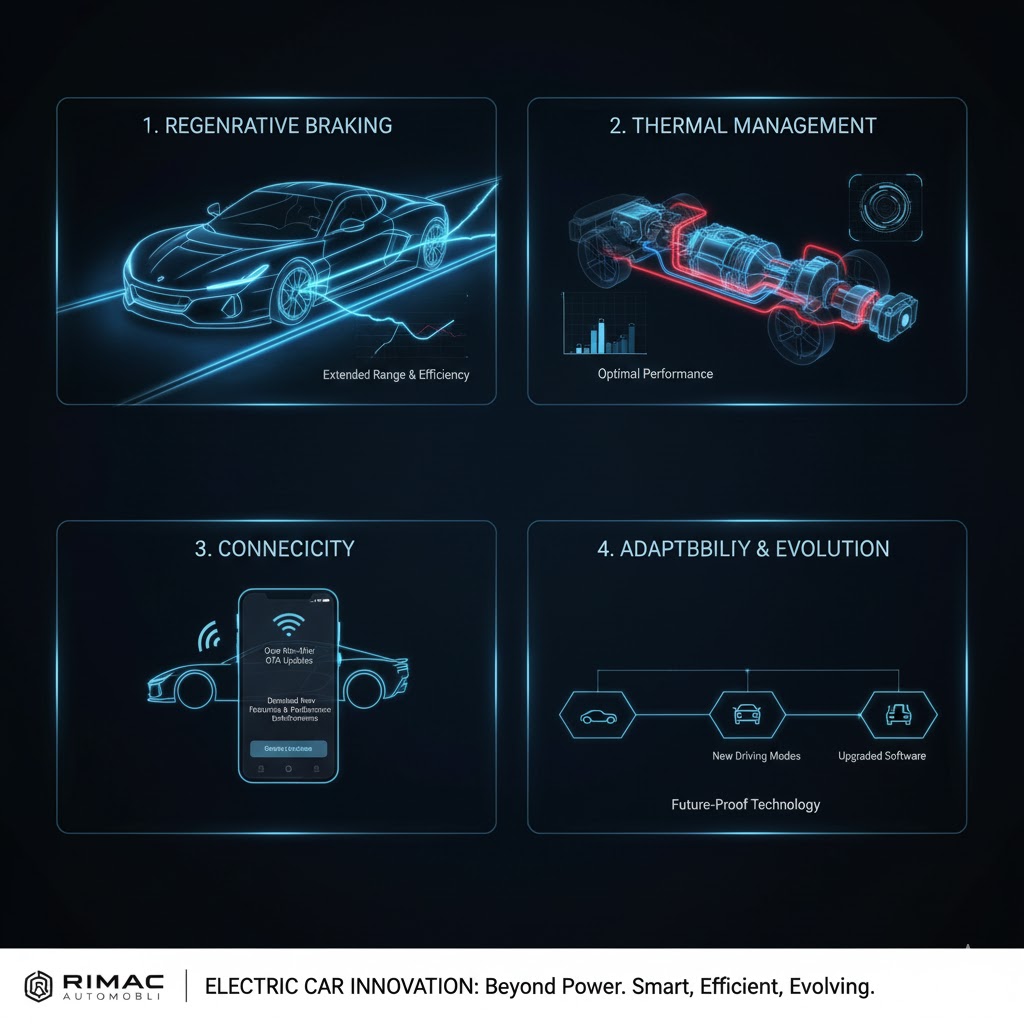
While raw acceleration grabs headlines, the Rimac Nevera also pushes boundaries in other key areas of electric car innovation:
- Regenerative Braking: The Nevera can recover more energy under braking than almost any other EV, extending its driving range and efficiency.
- Cooling Systems: Its thermal management ensures optimal motor and battery performance, even under sustained track conditions.
- Connectivity: The car is fully upgradable via over-the-air (OTA) updates, meaning future enhancements can boost performance or add new driving features.
This level of adaptability shows how far electric vehicles have come from being simple eco-friendly alternatives—they’re now at the forefront of technological evolution.
Rimac Nevera vs Other Electric Supercars 2025
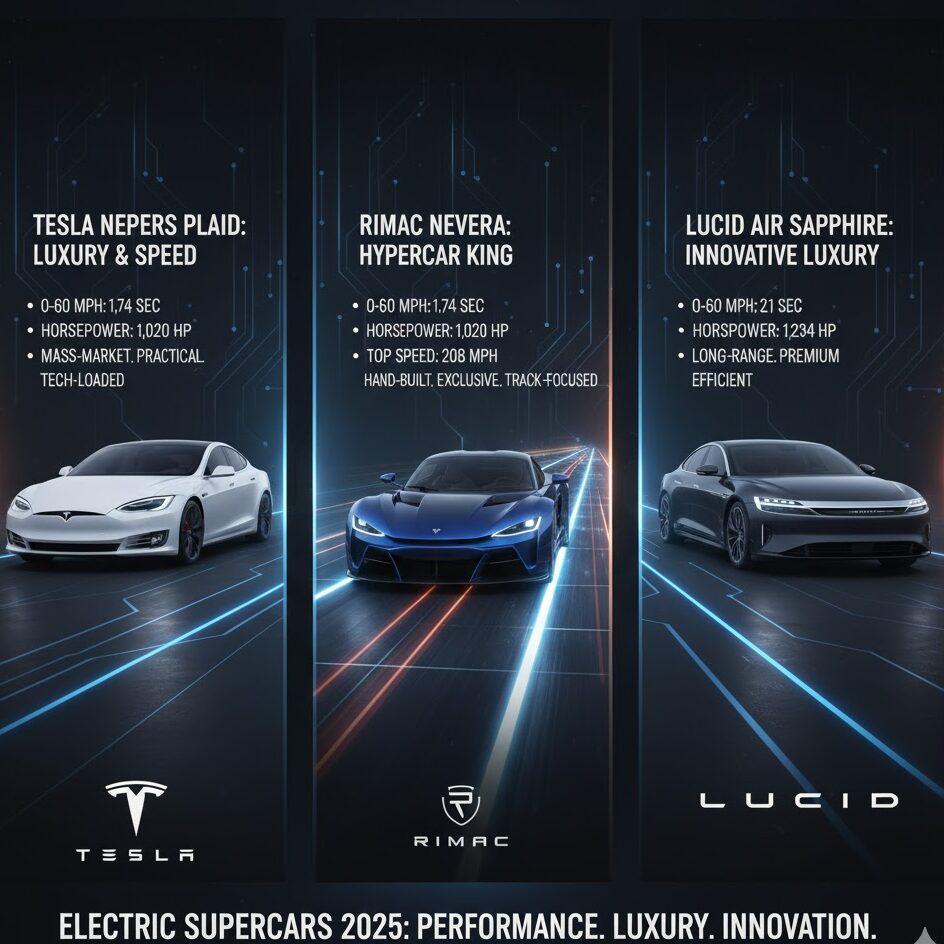
To understand the Nevera’s dominance, it helps to compare it with its closest rivals in the electric supercars 2025 lineup.
Tesla Model S Plaid
The Tesla Model S Plaid popularized high-performance electric sedans with its tri-motor setup and 0–60 mph time under 2 seconds. While it delivers incredible performance and practicality, the Plaid is still a mass-market luxury car compared to the bespoke, hand-built precision of the Rimac Nevera.
Lucid Air Sapphire
The Lucid Air Sapphire brings luxury and innovation together, boasting over 1,200 horsepower and impressive range. However, the Nevera’s track-ready handling, extreme aerodynamics, and higher power output place it in a league of its own.
These comparisons highlight that while Tesla and Lucid have revolutionized consumer EVs, Rimac focuses on the cutting edge of electric car performance—where speed, craftsmanship, and exclusivity intersect.
Electric vs Gas Supercars: The New Performance Era
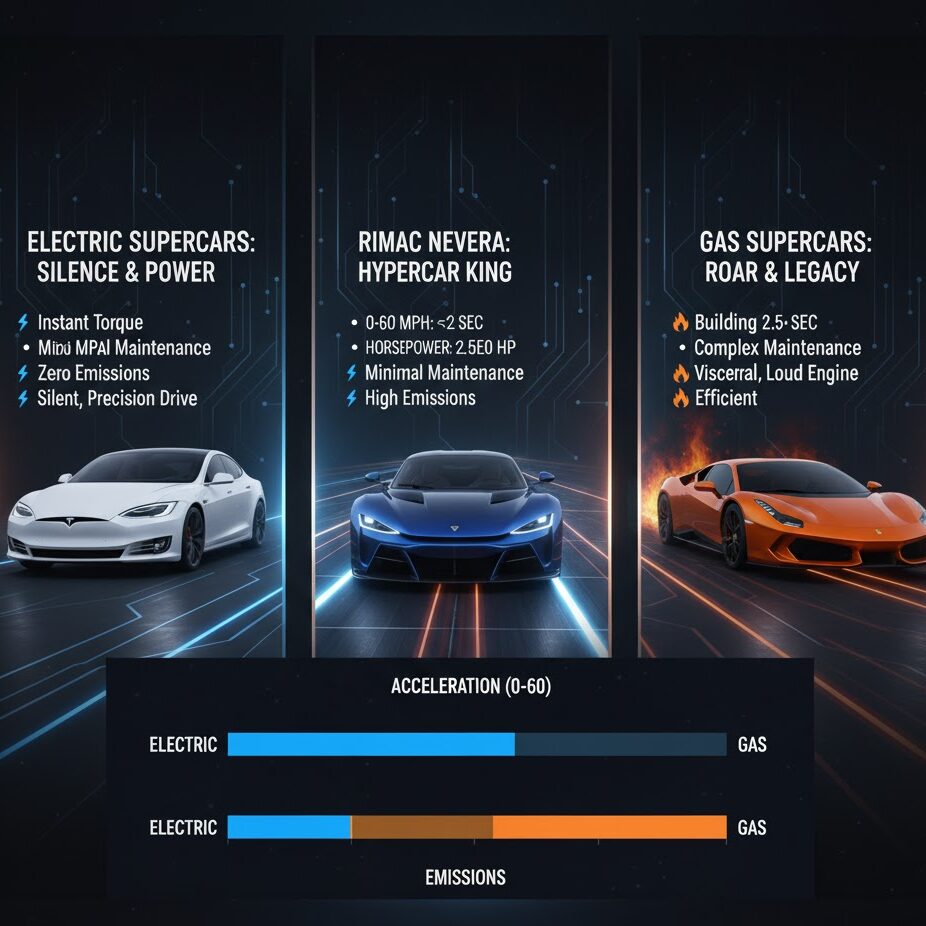
The rise of the Nevera reignites the debate of electric vs gas supercars. For decades, gasoline engines symbolized performance and prestige—think Bugatti, Ferrari, or Lamborghini. But the Nevera’s success challenges those icons in ways never imagined before.
Key Differences:
- Acceleration: Electric cars deliver instant torque, while gas engines need time to build power.
- Maintenance: EVs have fewer moving parts, reducing wear and long-term costs.
- Sound and Emotion: Gas supercars offer a visceral roar; electric hypercars offer silence and precision.
- Sustainability: EVs produce zero emissions and align with the future of clean mobility.
In many ways, the fastest electric car has become the new definition of performance—silent, efficient, and unbelievably powerful.
What the Rimac Nevera Means for the Future
The Nevera is more than a record-breaker—it’s a symbol of what’s coming next. It demonstrates that electric car innovation is not just about sustainability but about pushing the boundaries of speed, safety, and software integration.
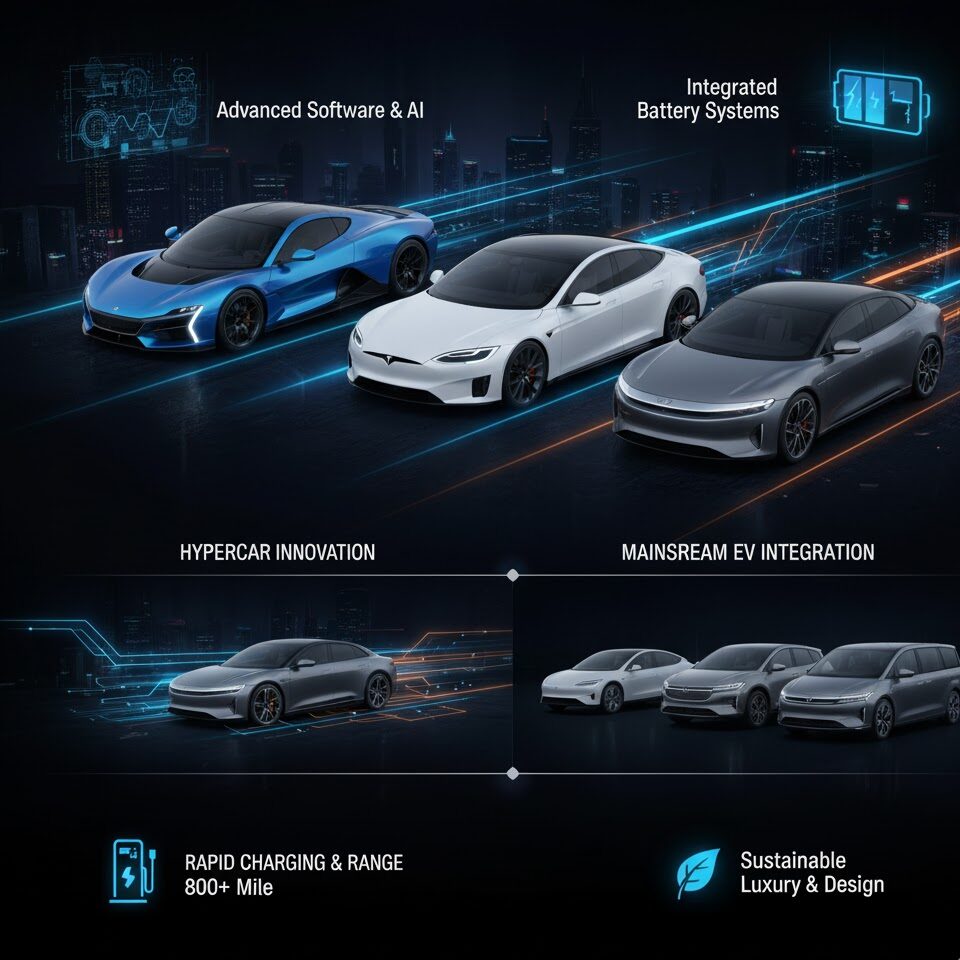
Looking ahead, technologies pioneered by Rimac will likely influence mainstream EVs, improving everything from performance sedans to compact electric SUVs. The lessons learned from hypercars like the Nevera, Tesla Model S Plaid, and Lucid Air Sapphire are already shaping how automakers design and optimize future vehicles.
Key Takeaways
- The Rimac Nevera is the fastest electric car, reaching speeds over 250 mph.
- Its electric car performance comes from a quad-motor system and cutting-edge software.
- Competing electric supercars 2025, like Tesla Plaid and Lucid Sapphire, highlight how far EVs have advanced.
- The Nevera proves that electric car innovation can outpace combustion engines in both speed and sophistication.
- The electric vs gas supercars debate now favors EVs for their instant torque, efficiency, and technological precision.
Conclusion
The story of how the Rimac Nevera became the fastest electric hypercar is one of vision, engineering, and innovation. It stands as the pinnacle of what’s achievable when technology meets passion.
By redefining electric car performance, Rimac has not only created a benchmark for the future but also proven that electric power is the ultimate frontier of speed.
At Nexgenwheels, we continue to explore how hypercars like the Nevera, Tesla Model S Plaid, and Lucid Air Sapphire are revolutionizing the automotive world. The fusion of EV performance technology and electric car innovation has ushered in a new era—where sustainability and speed coexist seamlessly.
The future of driving is electric, and with pioneers like Rimac leading the way, that future has never looked faster.
FAQs – Rimac Nevera & the Future of Electric Hypercars
- What makes the Rimac Nevera the fastest electric hypercar in the world?
The Rimac Nevera achieves its status through a quad-motor powertrain producing 1,914 horsepower, with a 0–60 mph time of 1.74 seconds and a top speed of 258 mph, making it the fastest production EV ever made. - Who created the Rimac Nevera?
The Nevera was engineered by Rimac Automobili, a Croatian company founded by Mate Rimac, known for combining cutting-edge electric technology with supercar performance. - How does the Rimac Nevera achieve such precise handling and acceleration?
Thanks to its four independent electric motors (one per wheel) and advanced torque vectoring software, the Nevera can dynamically control power delivery in real-time, optimizing grip and agility. - What is special about the Nevera’s battery system?
The Nevera uses a 120 kWh lithium-manganese-nickel battery, integrated into its carbon-fiber structure for strength, thermal efficiency, and a lower center of gravity—improving both range and handling. - How does the Rimac Nevera compare to the Tesla Model S Plaid and Lucid Air Sapphire?
While the Tesla and Lucid offer incredible speed and luxury, the Nevera is a bespoke hypercar designed for ultimate track performance. It exceeds both in power output, aerodynamics, and engineering complexity. - Is the Rimac Nevera just fast, or is it also efficient?
It’s both. The Nevera features regenerative braking, over-the-air software updates, and advanced thermal management systems, making it as smart and efficient as it is fast. - What does the Rimac Nevera mean for the future of EVs and hypercars?
The Nevera proves that electric car innovation can rival and surpass gas-powered supercars in speed, control, and sophistication. Its influence will shape the next generation of performance EVs across all segments.
