

For over a century, gas-powered engines have ruled the roads. The roar of a V8 or the scream of a V12 symbolized speed, power, and performance. Supercars like Ferrari, Lamborghini, and Bugatti dominated the world’s racetracks and inspired generations of car enthusiasts. But now, in 2025, the landscape of automotive performance has changed dramatically.
The fastest electric car models are not just catching up—they’re leaving traditional gas-powered rivals in the dust. Through electric car innovation and revolutionary EV performance technology, electric vehicles (EVs) are proving that speed and sustainability can coexist without compromise.
Let’s explore how electric cars are outperforming gas engines, what makes this transformation possible, and which electric supercars 2025 are redefining the future of performance driving.
The Evolution of Electric Car Performance
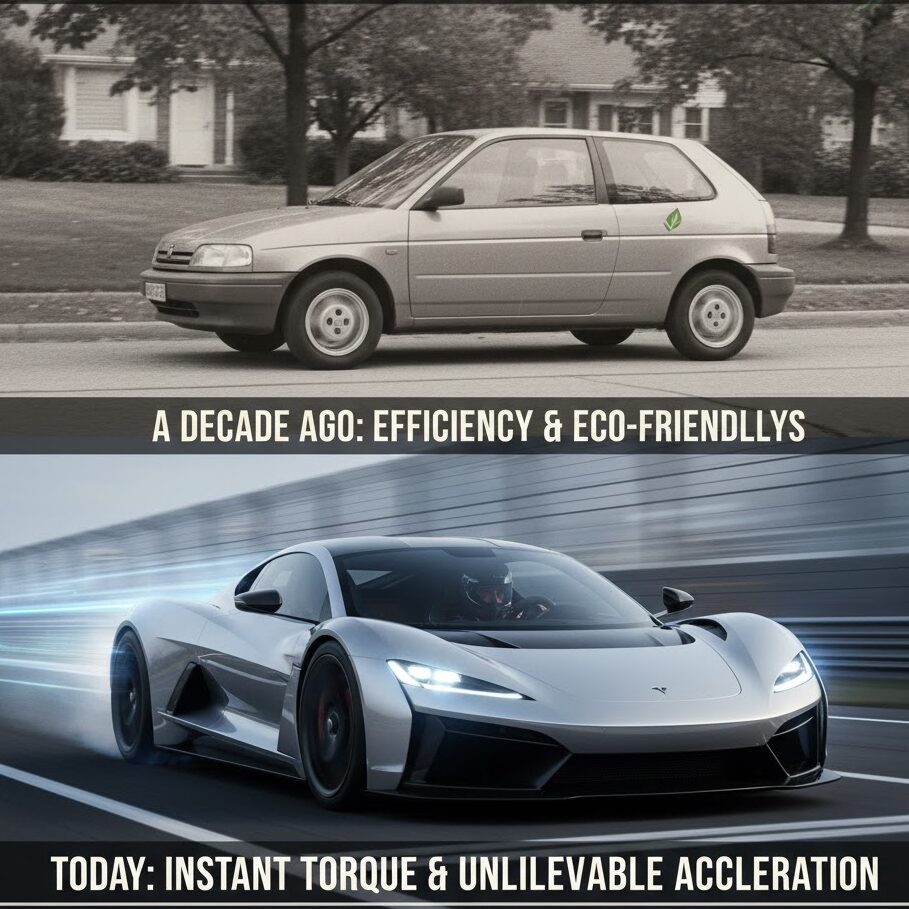
A decade ago, electric vehicles were praised for being eco-friendly, not for being fast. Early EVs focused on efficiency, long battery life, and reduced emissions. Performance was a secondary concern. That all changed when engineers realized that electric car performance could far exceed expectations with the right technology.
Unlike internal combustion engines that rely on fuel combustion, gear shifts, and mechanical limitations, electric motors deliver instant torque. This means acceleration is immediate, smooth, and relentless. While a gas car needs time to rev up, an electric car surges forward the moment you press the pedal.
This unique advantage has allowed EVs to achieve mind-blowing acceleration figures that were once thought impossible.
The Fastest Electric Car: A New Breed of Speed
Several modern EVs have shattered the traditional performance ceiling. Let’s take a look at the titans leading the charge:
1. Rimac Nevera: The Electric Hypercar King
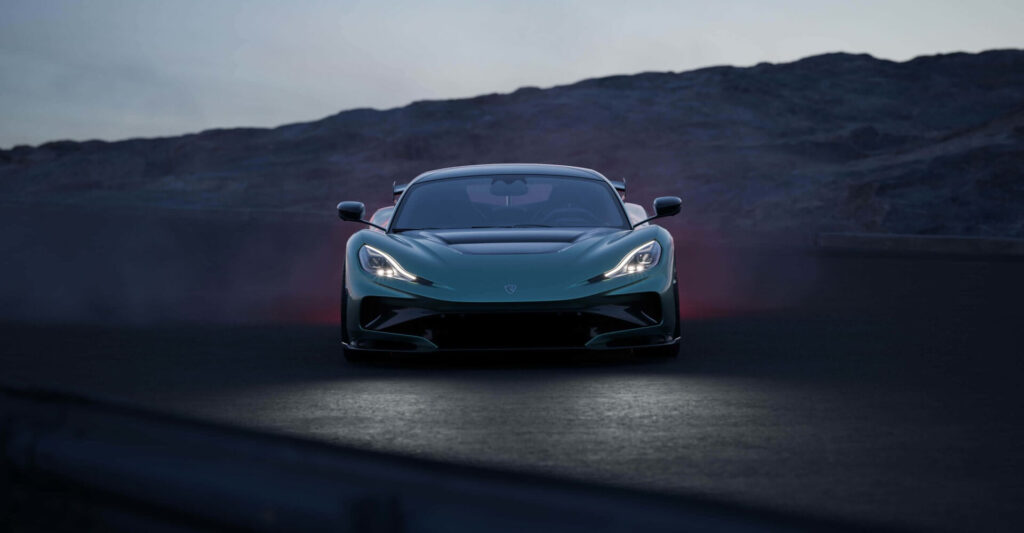
When it comes to the fastest electric car, the Rimac Nevera stands above all. Built in Croatia, this hypercar delivers astonishing stats:
- Horsepower: 1,914 hp
- 0–60 mph: 1.74 seconds
- Top speed: 258 mph (412 km/h)
The Nevera uses four independent electric motors, one for each wheel, offering unmatched control and precision. Its EV performance technology includes torque vectoring that adjusts power delivery to each wheel in real time, ensuring maximum traction and agility.
Unlike many supercars that struggle with handling their immense power, the Nevera’s software-driven system manages it flawlessly—making it as intelligent as it is fast.
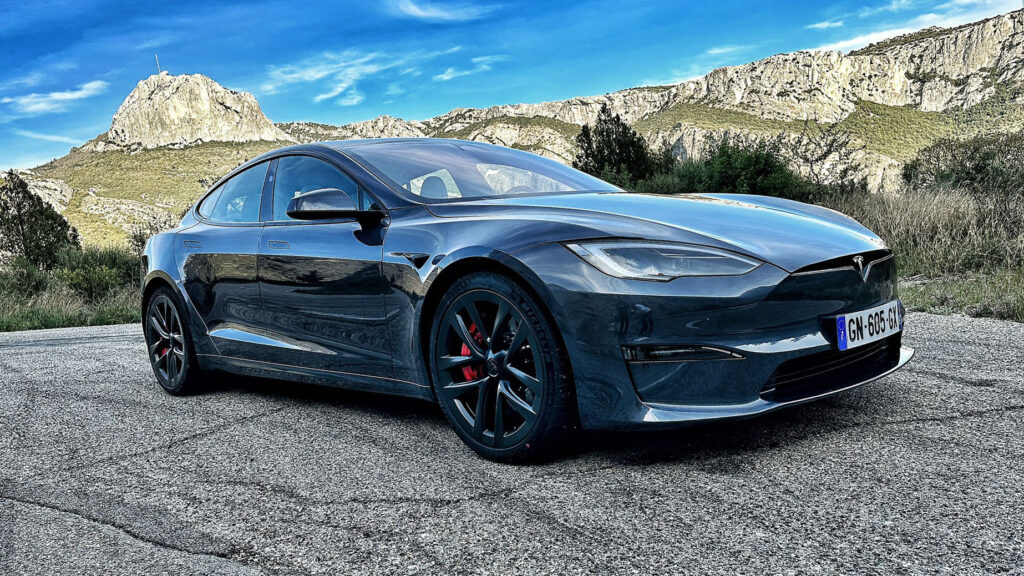
2. Tesla Model S Plaid: Everyday Powerhouse
Tesla’s Model S Plaid is proof that extreme performance doesn’t have to be limited to exotic hypercars. With its tri-motor setup, this electric sedan rockets from 0 to 60 mph in under 2 seconds—while seating five people comfortably.
The Tesla Model S Plaid merges practicality with performance, redefining what an everyday car can do. It represents electric car innovation for the masses—using software, battery efficiency, and aerodynamics to create an EV that’s both family-friendly and record-breaking.
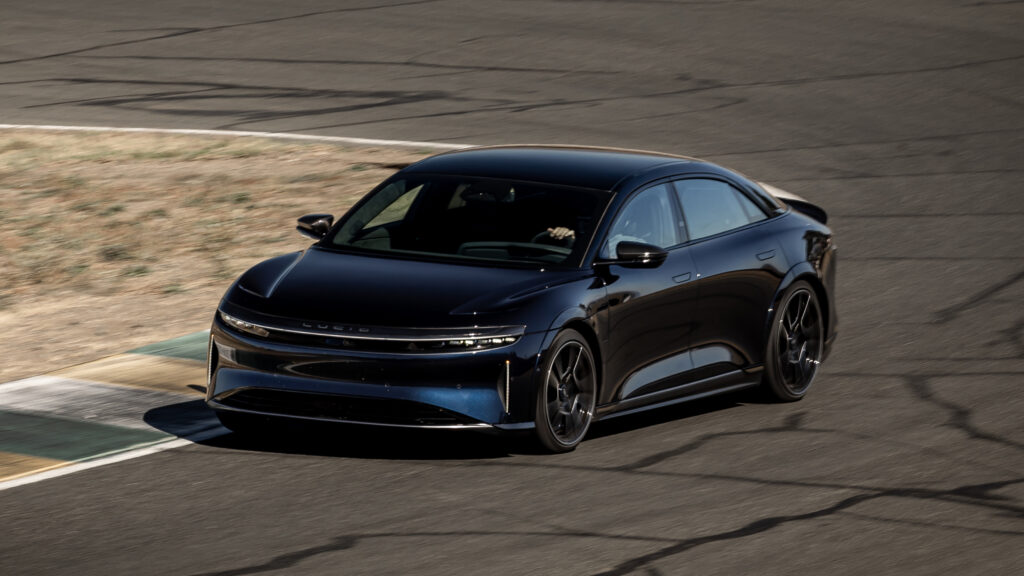
3. Lucid Air Sapphire: Luxury Meets Speed
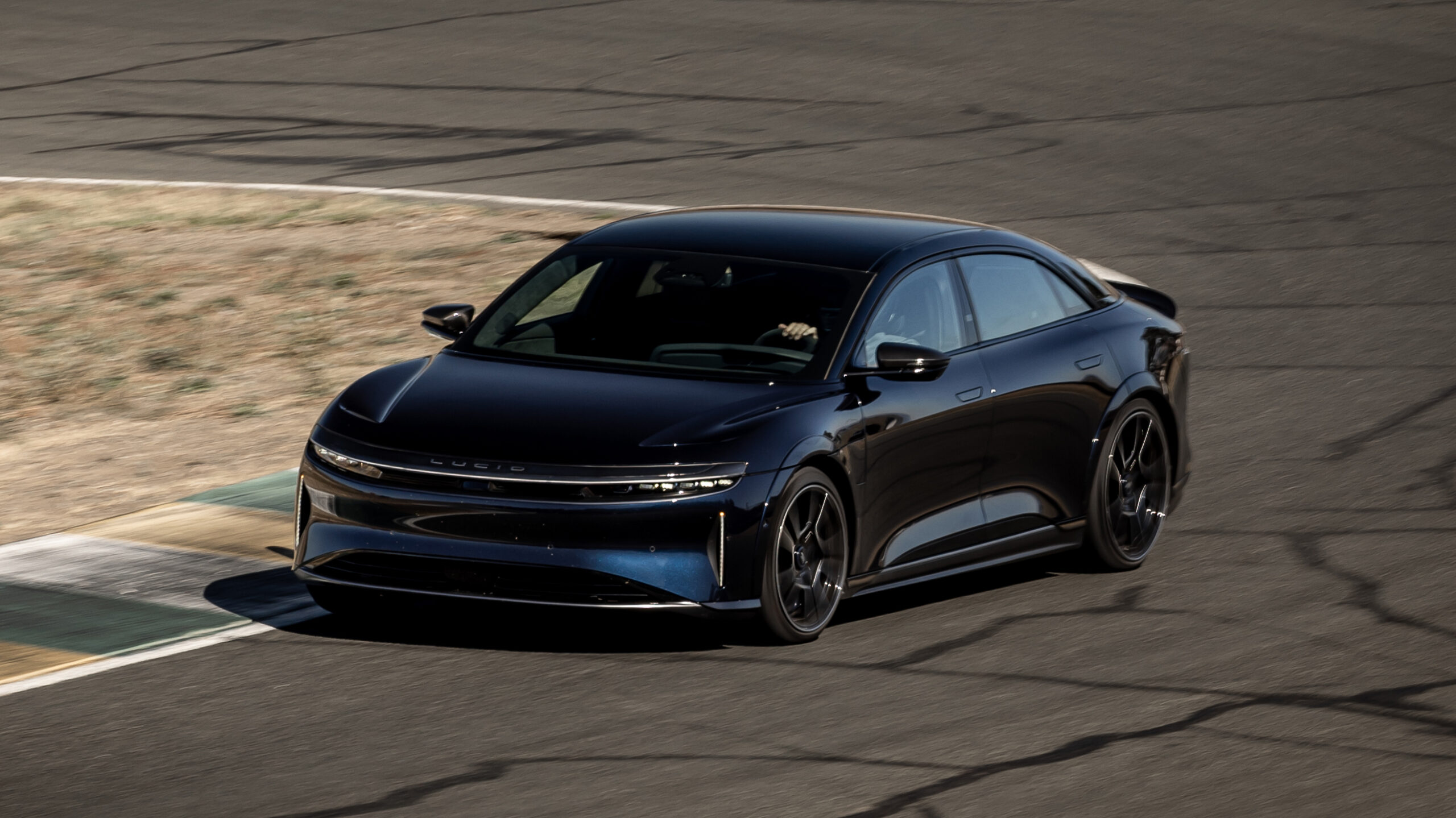
The Lucid Air Sapphire brings sophistication to the speed race. It combines elegance, long range, and stunning acceleration. Producing over 1,200 horsepower, it achieves 0–60 mph in just 1.89 seconds.
While it may not reach the Rimac Nevera’s top speed, the Sapphire showcases how electric supercars 2025 can deliver both comfort and adrenaline in one package.
Together, these EVs prove that the fastest cars in the world no longer run on gasoline—they run on electrons.
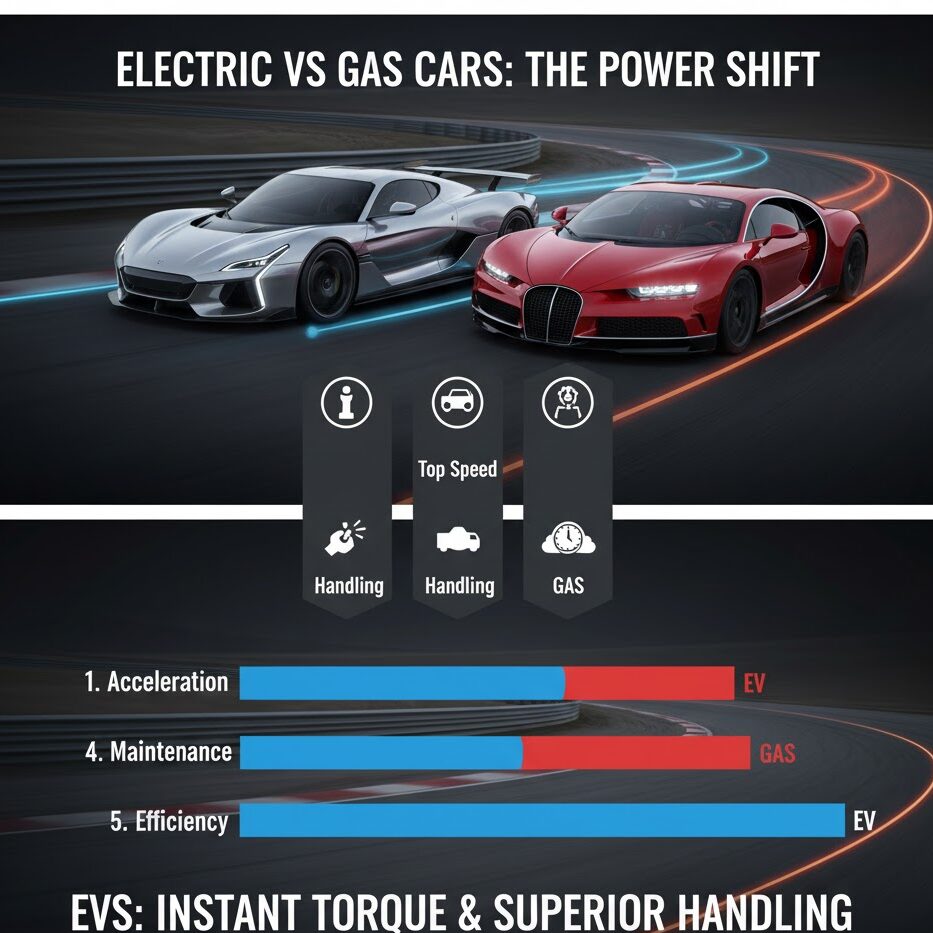
Electric vs Gas Cars: The Power Shift
To truly understand how the fastest electric car beats gas engines, we must compare the two technologies across key performance metrics.
1. Acceleration
EVs dominate this category. Because electric motors provide instant torque, acceleration happens instantly. The Rimac Nevera and Tesla Model S Plaid accelerate faster than most gas supercars, including icons like the Bugatti Chiron and Ferrari SF90.
2. Top Speed
Gas-powered hypercars still hold an advantage here. Models like the Bugatti Chiron Super Sport reach over 270 mph, while the fastest EVs top out around 258 mph. However, the gap is closing quickly as electric car innovation improves battery and motor efficiency.
3. Handling and Balance
The battery placement in EVs creates a lower center of gravity, improving stability and cornering. In electric vs gas cars, EVs often handle better in tight turns and have superior weight distribution.
4. Maintenance
Gas cars require oil changes, transmission services, and complex engine maintenance. EVs, with fewer moving parts, are more reliable and cheaper to maintain long-term.
5. Efficiency
EVs convert about 90% of electrical energy into motion, while internal combustion engines typically manage only 30–35%. That’s a massive efficiency advantage that translates directly into performance and economy.
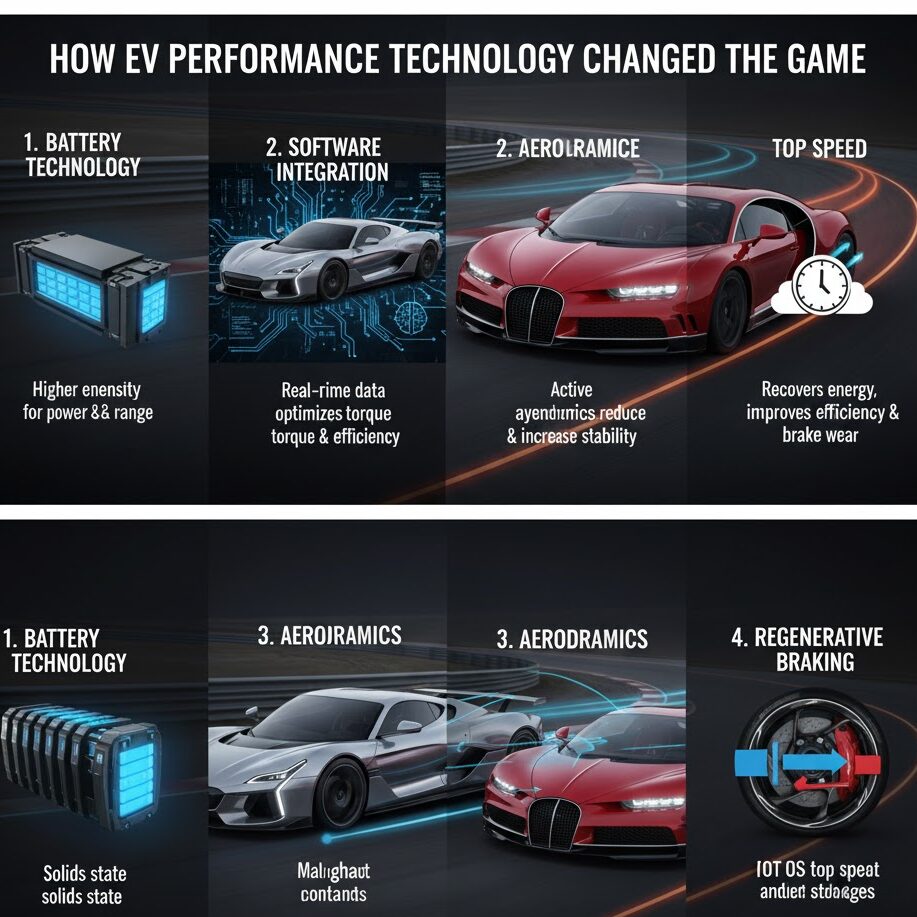
How EV Performance Technology Changed the Game
The rise of the fastest electric car is powered by breakthroughs in EV performance technology. These innovations have pushed electric supercars far beyond being mere novelties.
Battery Technology
Modern EVs use advanced lithium-ion and solid-state batteries with higher energy densities, allowing for greater power output and range.
Software Integration
Unlike mechanical gas engines, electric vehicles rely heavily on software. Real-time data processing optimizes torque, battery management, and aerodynamics—creating precision performance previously unimaginable.
Aerodynamics
EVs like the Lucid Air Sapphire and Rimac Nevera use active aerodynamics to reduce drag and increase stability at high speeds.
Regenerative Braking
This system allows EVs to recover energy during deceleration, improving efficiency and reducing brake wear—a feature gas cars simply can’t match.
Electric Supercars 2025: The Future Is Here
As we move further into 2025, electric supercars continue to evolve at lightning speed. Automakers worldwide are racing to create EVs that balance sustainability with pure performance.
The upcoming wave of electric supercars 2025 will feature advancements like:
- Solid-state batteries for lighter weight and faster charging.
- Multi-motor systems offering all-wheel torque vectoring.
- Improved cooling systems for sustained high-speed runs.
- Smarter, AI-driven performance management for adaptable driving modes.
The era of slow, practical EVs is over—today’s electric cars are fast, fierce, and technologically superior.
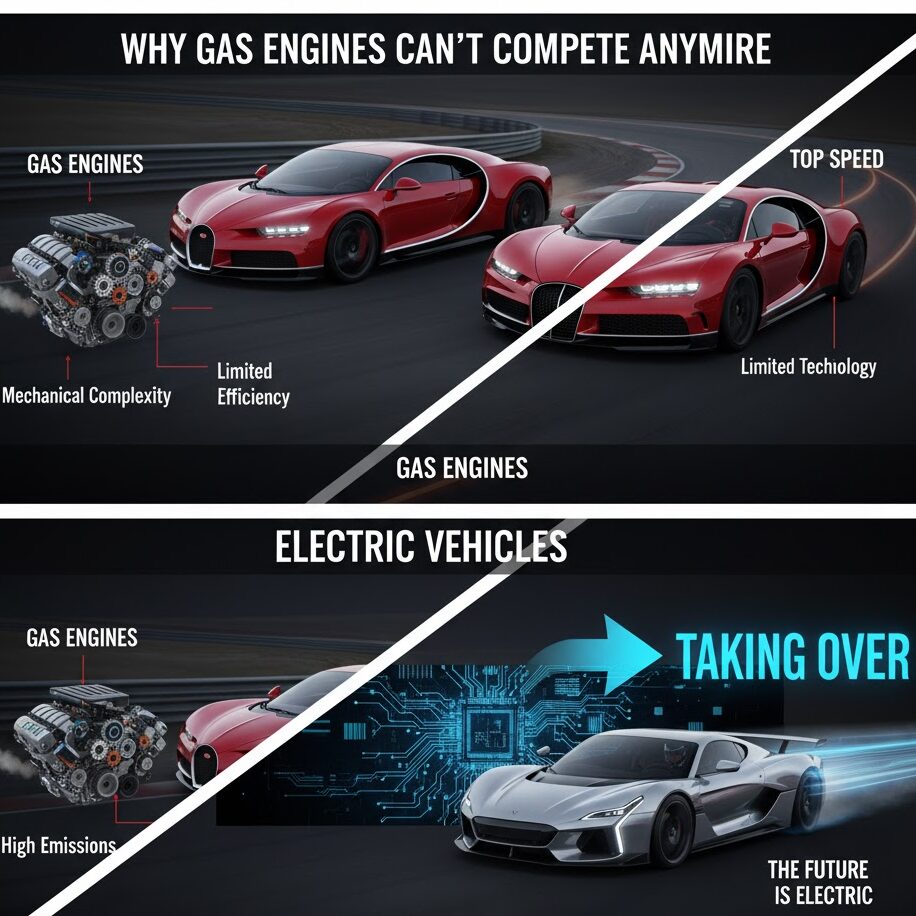
Why Gas Engines Can’t Compete Anymore
While traditional gas engines still hold a nostalgic charm, they are reaching the limits of their mechanical potential. Every new horsepower gained comes with added complexity, emissions, and fuel consumption.
EVs, on the other hand, are just beginning their performance journey. Their progress is exponential—each year brings faster acceleration, better efficiency, and smarter control. In electric vs gas cars, electricity isn’t just catching up—it’s taking over.
The next generation of drivers won’t associate performance with fuel; they’ll associate it with energy, technology, and sustainability.
Key Takeaways
- The fastest electric car delivers acceleration gas cars can’t match.
- Models like the Rimac Nevera, Tesla Model S Plaid, and Lucid Air Sapphire prove EVs can combine power with practicality.
- Electric car innovation and EV performance technology continue to evolve rapidly.
- While gas cars still dominate top-speed records, EVs lead in torque, efficiency, and design intelligence.
- Electric supercars 2025 mark the beginning of a new performance era driven by electricity.
Conclusion
The fastest electric car represents more than just speed—it’s the symbol of a revolution. While gas engines once defined power, electric technology now defines progress. With instant torque, unmatched efficiency, and groundbreaking electric car innovation, EVs are proving that clean energy and high performance can go hand in hand.
At Nexgenwheels, we believe this transformation is shaping the future of driving. As electric supercars 2025 like the Rimac Nevera, Tesla Model S Plaid, and Lucid Air Sapphire lead the charge, the automotive world is entering an era where technology outpaces tradition. The road ahead is faster, smarter, and unmistakably electric—and Nexgenwheels will be here to drive that future forward.
FAQs – Fastest Electric Cars vs Gas Engines in 2025
- What is currently the fastest electric car in 2025?
The Rimac Nevera holds the title in 2025, with a top speed of 258 mph and 0–60 mph acceleration in just 1.74 seconds. It’s a fully electric hypercar powered by four independent electric motors. - Are electric cars faster than gas-powered cars?
In terms of acceleration, yes. Electric cars deliver instant torque, which allows them to accelerate much faster than gas-powered vehicles. Many EVs now outperform traditional supercars in 0–60 mph times. - How does the Tesla Model S Plaid compare to gas supercars?
The Tesla Model S Plaid accelerates from 0–60 mph in under 2 seconds, making it faster off the line than most gas-powered supercars, including the Ferrari SF90 and Bugatti Chiron, while still offering space for five passengers. - Do electric cars handle better than gas cars?
Generally, yes. EVs have a lower center of gravity due to battery placement, which improves handling and cornering stability. Weight distribution and torque vectoring also enhance balance and agility. - Can electric cars reach higher top speeds than gas cars?
Not yet. While electric cars dominate acceleration, gas-powered hypercars like the Bugatti Chiron Super Sport still lead in top speed, exceeding 270 mph. However, the gap is shrinking quickly. - What makes EV performance technology superior to gas engines?
EVs benefit from instant torque, software-optimized power delivery, regenerative braking, and fewer mechanical parts, resulting in higher efficiency, quicker response times, and lower maintenance. - Are electric supercars the future of high-performance driving?
Absolutely. Electric supercars in 2025 like the Lucid Air Sapphire and Rimac Nevera demonstrate that EVs can deliver luxury, speed, and sustainability, marking a new era where technology surpasses tradition.
