

Fuel choices play a significant role in the performance, maintenance, and longevity of any vehicle. For modern cars, petrol blends such as Petrol 10 Ethanol (commonly known as E10 fuel) are considered both cost-effective and environmentally responsible. However, when it comes to classic cars—vehicles built in an era before ethanol blends became mainstream—using ethanol-based fuels can lead to serious problems.
This article explores why ethanol fuel, particularly E10 fuel, is considered harmful to classic cars. We’ll also discuss the differences between ethanol free petrol and ethanol blends, examine the impact on fuel efficiency, and explain why many classic car owners prefer non ethanol petrol. Additionally, we’ll touch on the rising ethanol petrol price and the risky practice of trying to remove ethanol from petrol.
What Is Ethanol Fuel?
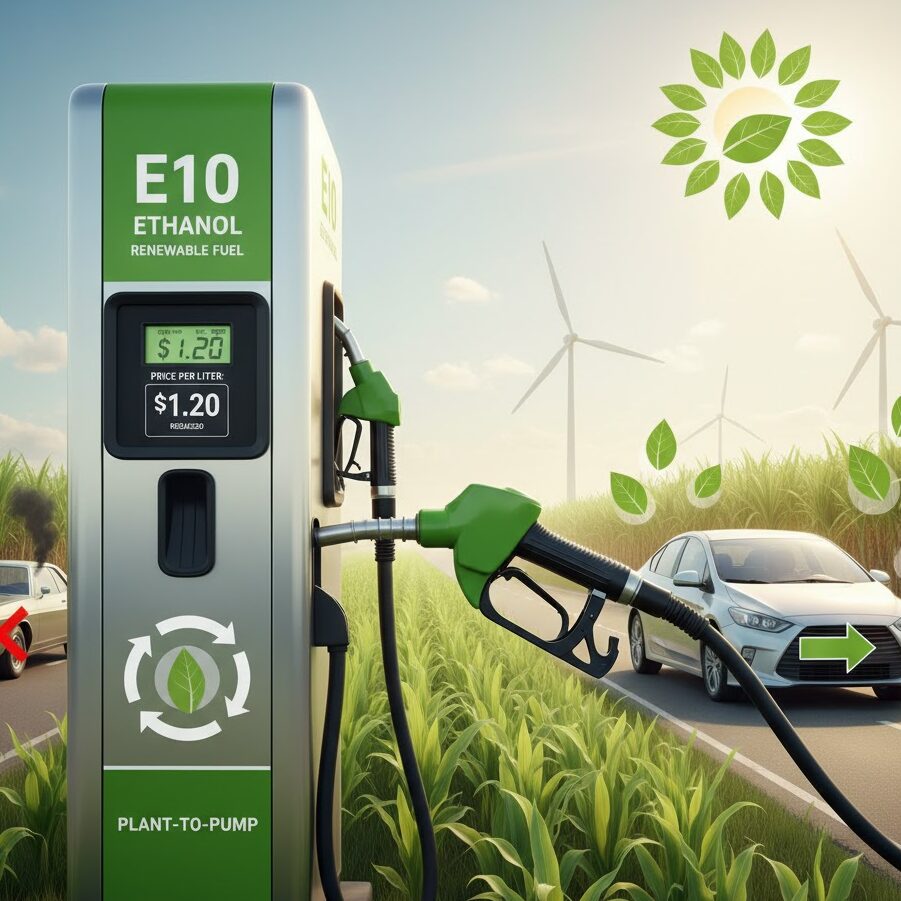
Ethanol is a type of alcohol made from plant materials such as corn or sugarcane. It’s commonly used as a renewable additive in petrol to reduce carbon emissions and dependency on fossil fuels. The most widely available ethanol blend is Petrol 10 Ethanol or E10 fuel, which contains 10% ethanol and 90% petrol.
Ethanol blends are classified as eco-friendly fuel because they emit fewer greenhouse gases than pure petrol. They are also cheaper to produce, which contributes to a lower ethanol petrol price at the pump. While these benefits sound promising, they don’t necessarily translate well to older vehicles.
Why Ethanol Fuel and Classic Cars Don’t Mix
1. Material Incompatibility
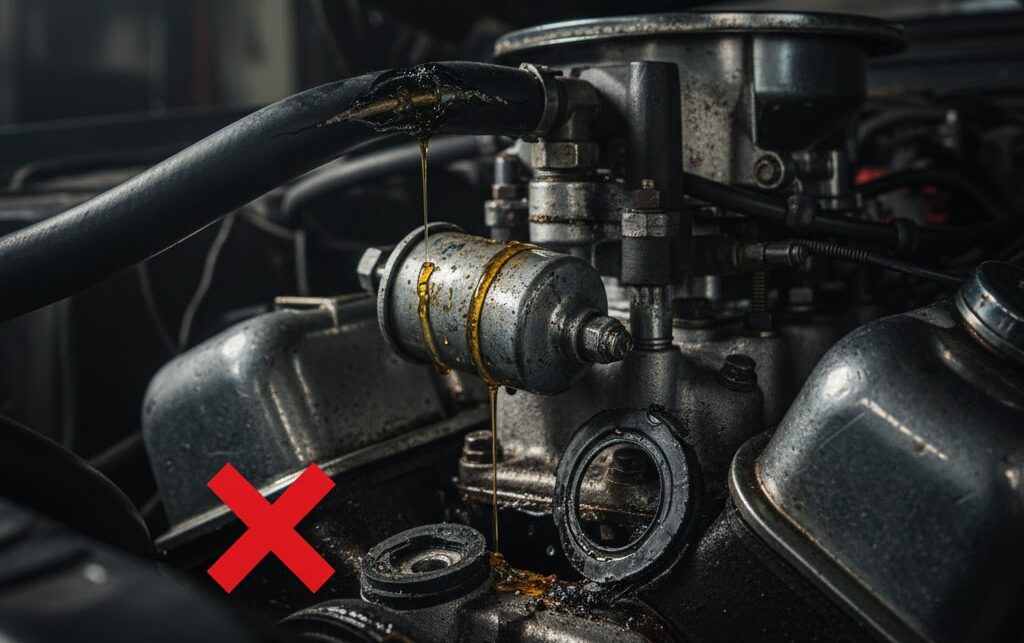
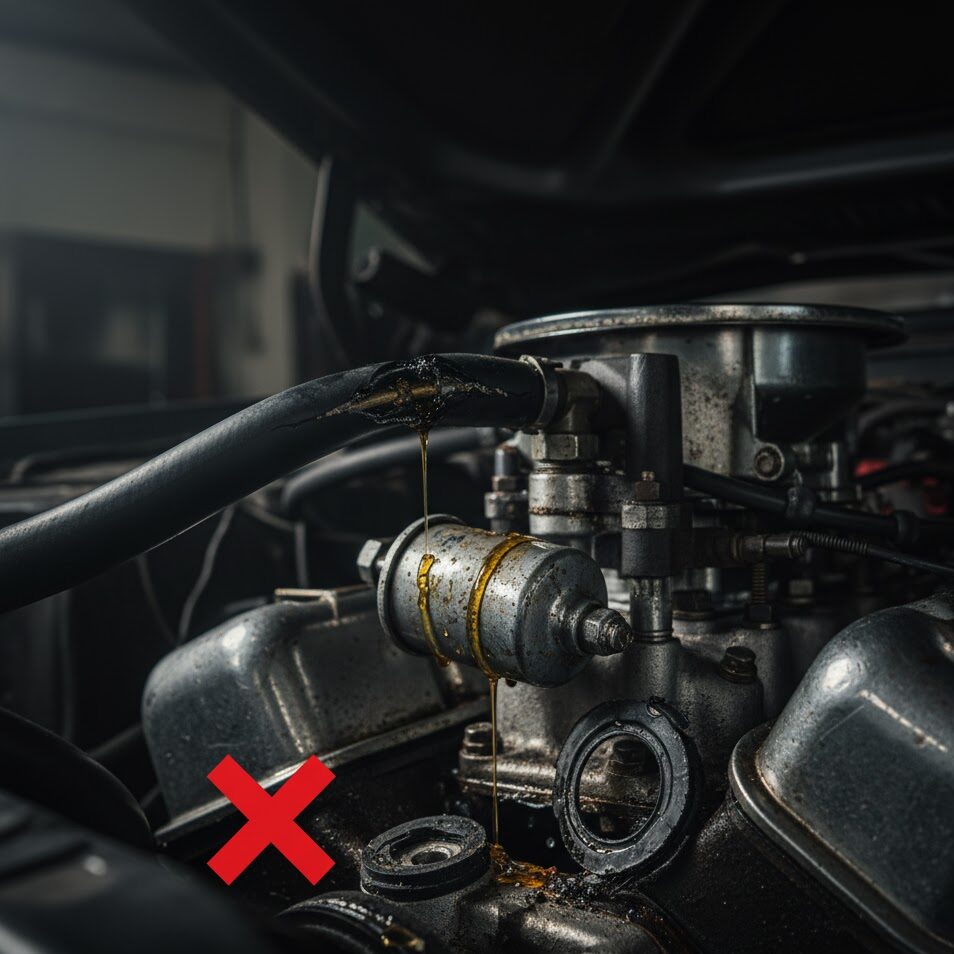
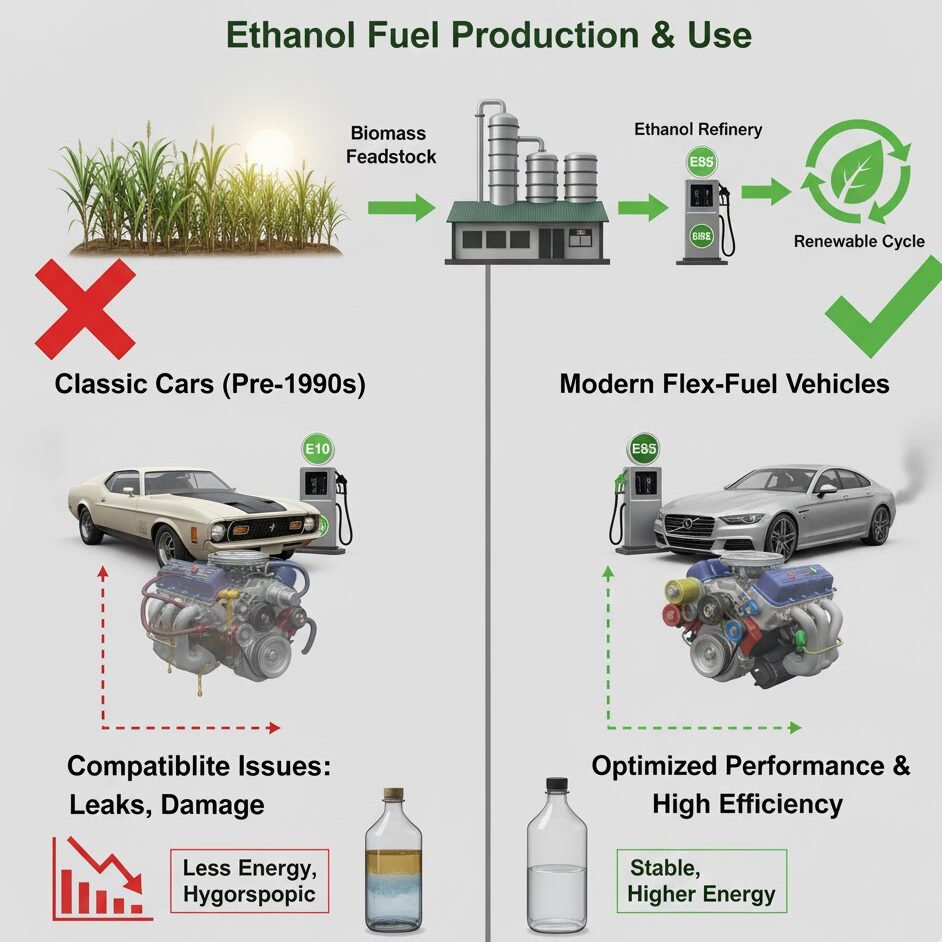
Classic cars, especially those manufactured before the 1990s, were not designed to handle ethanol-based fuels. Their fuel systems often include rubber hoses, seals, and gaskets that are vulnerable to ethanol’s corrosive properties. Over time, ethanol can degrade these components, leading to fuel leaks, engine misfires, and even complete system failure.
2. Moisture Absorption
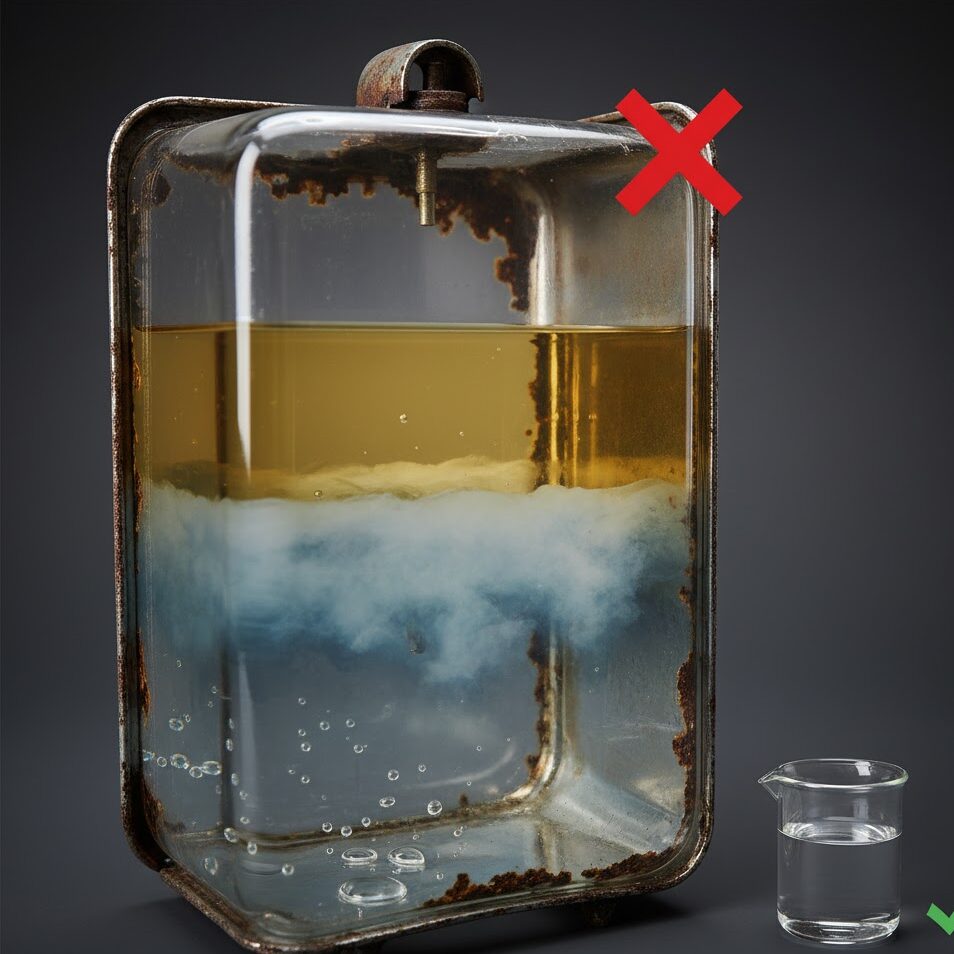
Ethanol is hygroscopic—it absorbs water from the atmosphere. When E10 fuel sits in the tank of a classic car (which may not be driven daily), the absorbed moisture can cause phase separation. This leads to a layer of water and ethanol forming beneath the petrol, which can damage the engine and fuel system when drawn into the combustion chamber.
This risk is heightened in classic cars that are stored for extended periods, making ethanol free petrol the safer option. Unlike ethanol blends, non ethanol petrol is stable over time and does not attract moisture, making it a more suitable classic car fuel.
3. Lower Fuel Efficiency
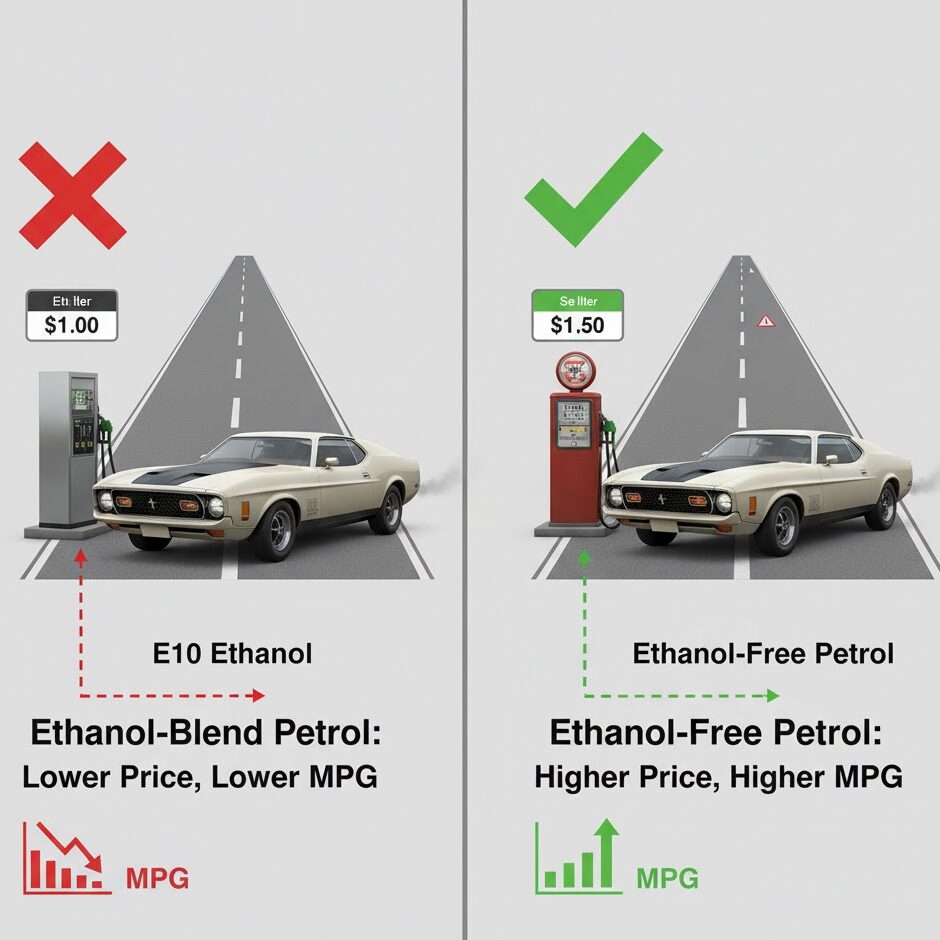
Another downside of using Petrol 10 Ethanol in classic cars is reduced fuel efficiency. Ethanol contains less energy per litre than pure petrol. This means that even though ethanol petrol price may be lower, the car consumes more fuel to travel the same distance.
Classic engines, which are not optimized for ethanol blends, suffer even more from this energy deficit. The result is a noticeable drop in miles per gallon (MPG), increased fuel consumption, and, ultimately, higher operating costs.
4. Engine Knock and Poor Performance
Classic engines were built with specific octane requirements and fuel characteristics in mind. Introducing ethanol blends can cause issues like engine knocking or pinging due to the altered combustion properties. In worst-case scenarios, continued use of E10 fuel can lead to severe engine damage.
Owners often report reduced throttle response, inconsistent idling, and sluggish acceleration when using ethanol blend fuels in vintage vehicles.
Ethanol Free Petrol vs. Petrol 10 Ethanol
Understanding the difference between ethanol free petrol and Petrol 10 Ethanol is crucial for classic car owners.
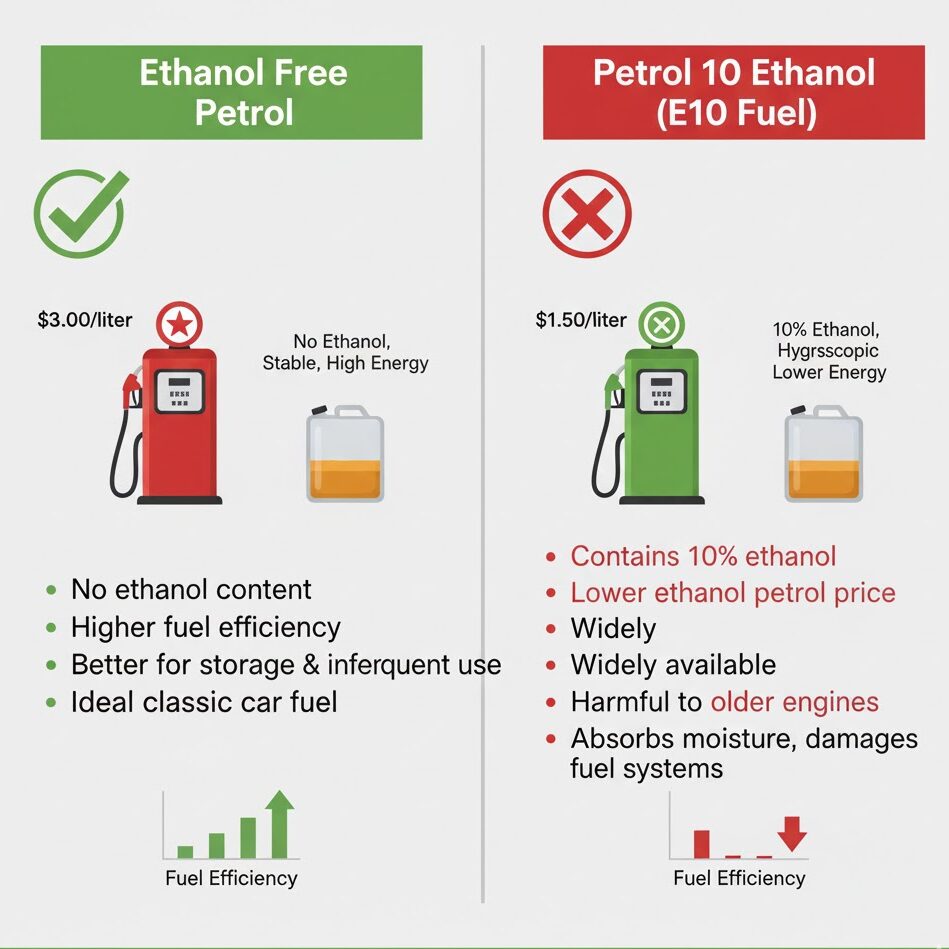
- Ethanol Free Petrol:
- No ethanol content
- Higher fuel efficiency
- Better for storage and infrequent use
- Ideal classic car fuel
- Higher price and limited availability
- No ethanol content
- Petrol 10 Ethanol (E10 Fuel):
- Contains 10% ethanol
- Lower ethanol petrol price
- Widely available
- Harmful to older engines
- Absorbs moisture, which can damage fuel systems
- Contains 10% ethanol
The convenience and affordability of E10 make it a good choice for modern vehicles, but these advantages are outweighed by the risks for classic cars.
Why Some Try to Remove Ethanol from Petrol
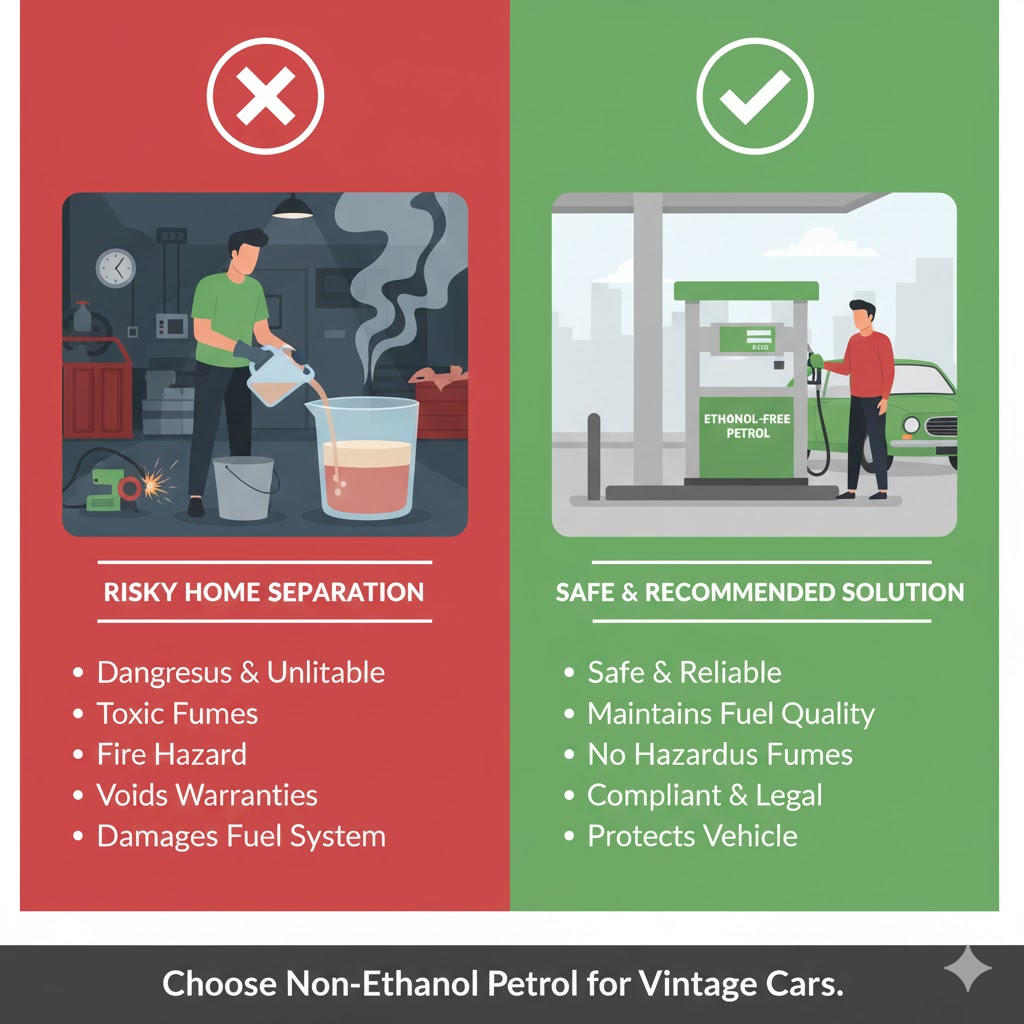
Because of the issues outlined above, some enthusiasts attempt to remove ethanol from petrol using home-based methods like water separation. The idea is to mix water with E10 fuel, let the ethanol bond with the water, and then separate the remaining petrol.
While this may sound clever in theory, it’s dangerous and unreliable in practice. Separating ethanol from fuel at home is imprecise, can damage the fuel quality, and introduces safety hazards due to flammable liquids and toxic fumes. Moreover, doing this can void warranties, violate local fuel regulations, and potentially harm your vehicle.
Instead of resorting to risky DIY solutions, the better approach is to locate and purchase non ethanol petrol, especially for vintage and specialty vehicles.
Conclusion
While Petrol 10 Ethanol (E10 fuel) is a step toward eco-friendly fuel usage and cost efficiency for the general population, it poses multiple threats to the health and performance of classic vehicles. From damaged fuel systems and reduced fuel efficiency, to moisture absorption and long-term engine wear, the risks are too significant to ignore.
Classic car enthusiasts are strongly advised to stick with non ethanol petrol or ethanol free petrol, despite the higher cost and limited availability. The choice of the right classic car fuel ensures your vehicle’s longevity, performance, and reliability.
And while the idea of trying to remove ethanol from petrol might be tempting, it’s not a safe or sustainable solution. A better approach is making informed fuel choices based on your car’s age, engine type, and usage habits.
At nexgenwheels, we believe that preserving automotive heritage starts with knowledge. Understanding how ethanol impacts classic cars empowers you to make smarter decisions and enjoy the ride—exactly as it was meant to be.
FAQs – Ethanol Fuel and Classic Cars
- Why is ethanol fuel bad for classic cars?
Ethanol fuel can damage rubber and metal parts in classic cars not designed for it. Ethanol absorbs moisture, causes corrosion, reduces fuel efficiency, and can clog carburetors — all of which affect performance and reliability in vintage vehicles. - Can classic cars run on E10 fuel (Petrol 10 Ethanol)?
While technically possible, it’s not recommended. E10 can degrade older fuel system components, attract water, and lower engine performance. If used, it should be combined with fuel stabilizers and modern fuel system upgrades. - What’s the difference between ethanol-free petrol and E10 fuel?
Ethanol-free petrol contains no ethanol, making it more stable and safer for classic engines. E10 fuel has 10% ethanol, which can lead to moisture absorption, fuel system damage, and lower MPG in older cars not designed for alcohol-blended fuels. - Can ethanol damage a carburetor in a classic car?
Yes. Ethanol can leave deposits in carburetors, clogging jets and fuel passages. Over time, this may lead to rough idling, poor throttle response, and even fuel delivery failure — requiring expensive cleaning or repair. - Why does ethanol reduce fuel efficiency in classic cars?
Ethanol has less energy per litre than pure petrol. This means older engines need to burn more fuel to achieve the same performance, resulting in lower miles per gallon (MPG) and higher overall fuel costs, despite a cheaper pump price. - Is it safe to remove ethanol from petrol at home?
No. DIY methods to remove ethanol (like water separation) are unsafe, imprecise, and may degrade fuel quality. These methods involve flammable liquids and risk legal or mechanical consequences. It’s better to buy ethanol-free petrol from trusted sources. - What fuel should I use in my classic car?
Use ethanol-free petrol whenever possible. If only E10 is available, add a fuel stabilizer, drive regularly to prevent fuel separation, and consider upgrading to ethanol-resistant fuel components.
