


The global automotive industry is entering one of its most transformative periods in decades. Rapid electrification, rising production costs, intense competition from new players, and shifting consumer expectations are forcing traditional automakers to rethink their strategies. In this context, the Nissan Honda Merger has emerged as one of the most talked-about developments in the car world.
While mergers and alliances are not new in the automotive sector, a potential partnership between two Japanese giants like Nissan and Honda could reshape how cars are designed, built, and sold in the coming years. From electric vehicles and hybrid technology to software, manufacturing, and global market positioning, the implications of the Nissan Honda Merger go far beyond a simple business deal.
In this in-depth guide from NexgenWheels, we explore what the Nissan Honda Merger could mean for the future of cars, why it matters now, and how it could impact drivers, the industry, and the global auto market.
Why the Nissan Honda Merger Is Gaining Attention
Both Nissan and Honda have long histories of engineering excellence, innovation, and global reach. However, the automotive landscape has changed dramatically in recent years.
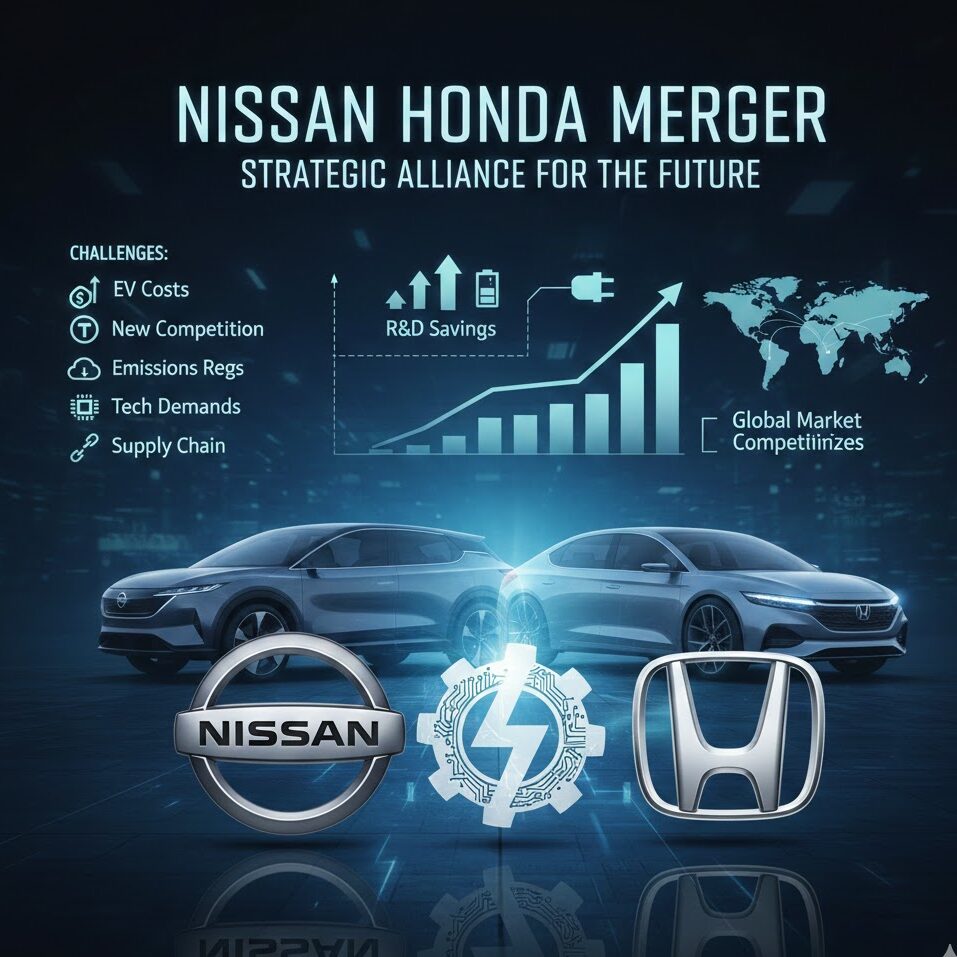
Key Challenges Facing Automakers
- Rising costs of electric vehicle development
- Increased competition from Tesla and Chinese EV brands
- Strict emissions regulations worldwide
- Software and battery technology demands
- Supply chain disruptions and material shortages
The Nissan Honda Merger is being viewed as a strategic response to these challenges. By combining resources, expertise, and technology, both companies could strengthen their position in a fast-evolving market.
A Brief Look at Nissan and Honda as Individual Brands
Before understanding the impact of a merger, it’s important to recognize what each company brings to the table.
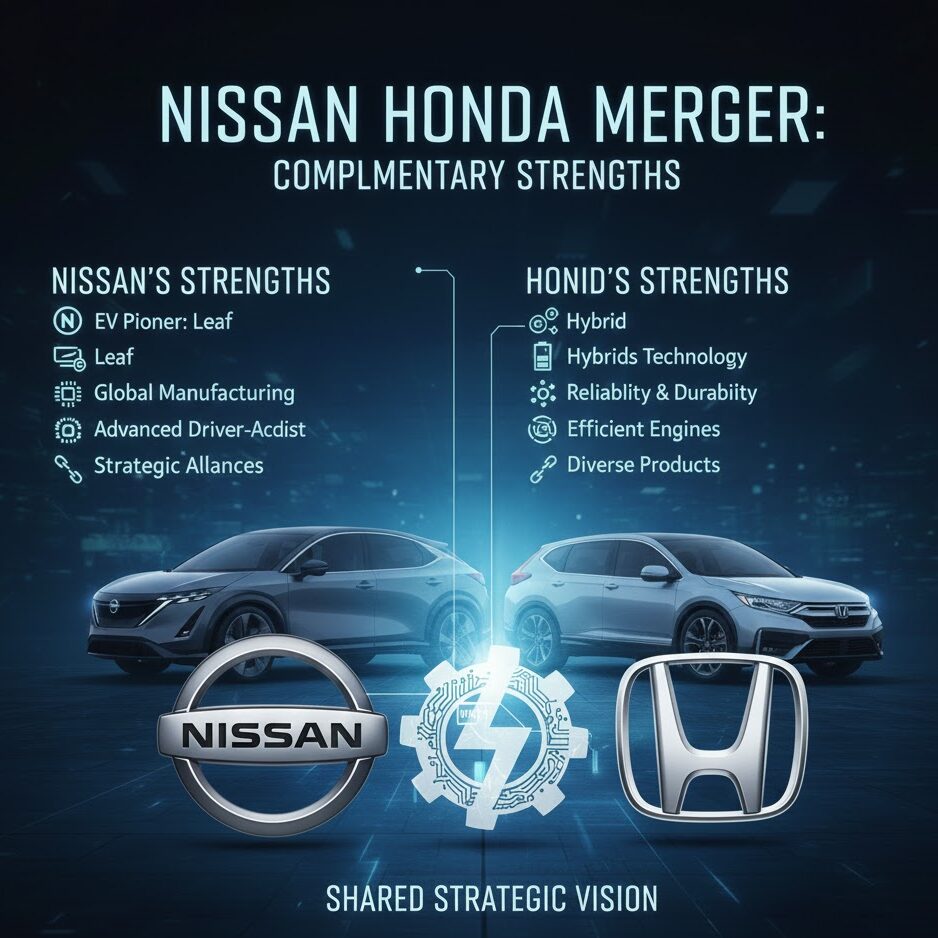
Nissan’s Strengths
Nissan has been a pioneer in electric vehicles, particularly with early models that helped popularize EVs globally. The company also has a strong presence in North America, Europe, and Asia.
Key strengths include:
- Experience with mass-market electric vehicles
- Strong global manufacturing network
- Advanced driver-assistance systems
- Established partnerships and alliances
Honda’s Strengths
Honda is known for reliability, efficient engineering, and strong hybrid technology. The brand has built a loyal customer base across cars, motorcycles, and power products.
Key strengths include:
- Industry-leading hybrid systems
- Strong reputation for durability
- Efficient engine design
- Diverse product portfolio
A Nissan Honda Merger would bring these strengths together under a shared strategic vision.
How the Nissan Honda Merger Could Impact Electric Vehicles
Electric vehicles are at the center of this potential partnership. Both brands understand that EVs will dominate the future of mobility, but developing competitive electric platforms is expensive and time-consuming.
Shared EV Platforms and Batteries
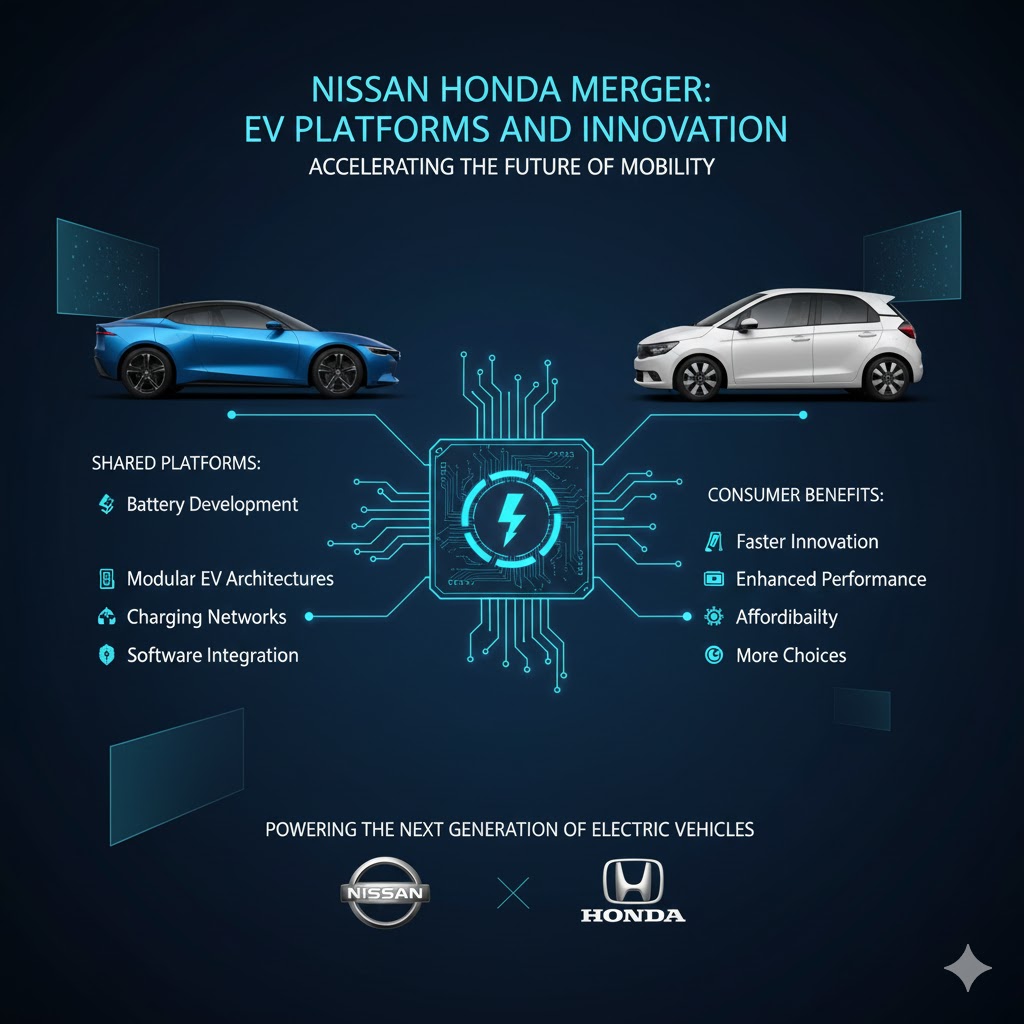
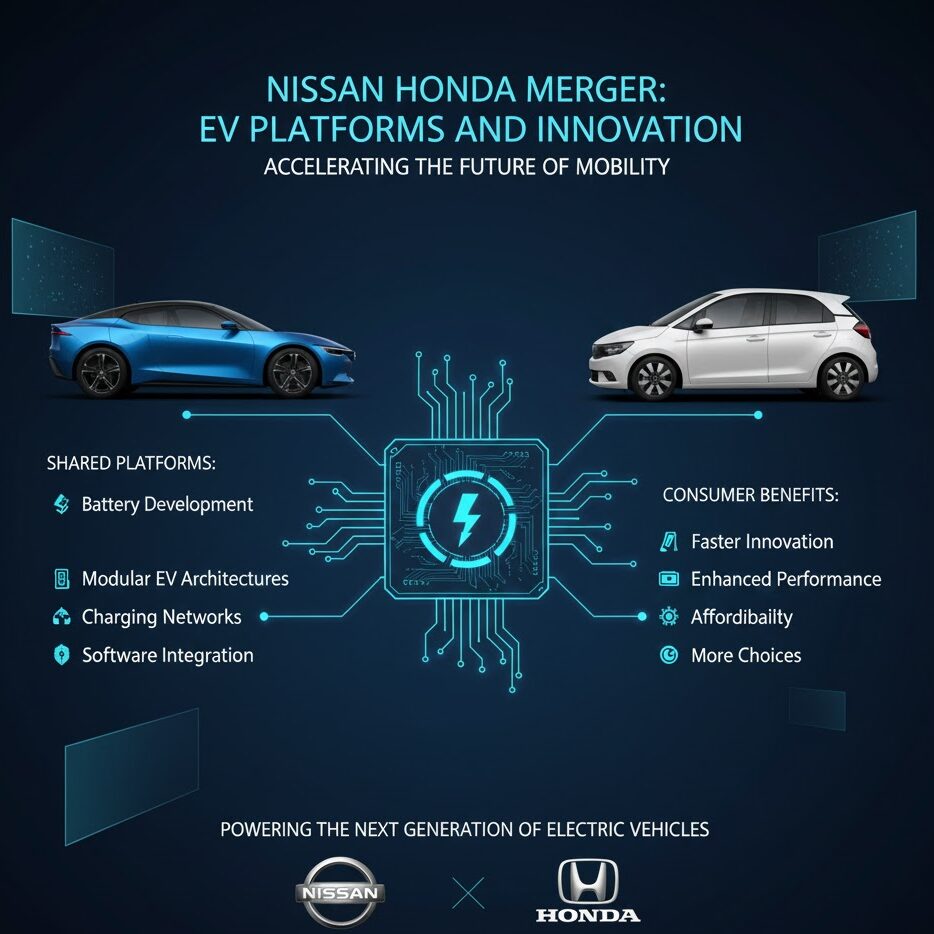
One major benefit of the Nissan Honda Merger could be shared EV architectures. Instead of developing separate platforms, the companies could collaborate on:
- Battery development and sourcing
- Modular EV platforms
- Charging and energy management systems
- Software integration
This collaboration could lead to faster innovation, better performance, and more affordable electric cars for consumers.
What It Means for Hybrid and Fuel-Efficient Cars
While EVs are gaining momentum, hybrids still play a critical role in many markets. Honda expertise in hybrid technology could complement Nissan’s electrification strategy.
Potential outcomes include:
- More advanced hybrid systems
- Improved fuel efficiency across models
- Smoother transition for drivers not ready for full EVs
The Nissan Honda Merger could accelerate the shift toward cleaner vehicles without forcing consumers into sudden changes.
Manufacturing and Cost Efficiency Advantages
One of the biggest motivations behind large-scale mergers is cost reduction. Automotive manufacturing is capital-intensive, and sharing production resources can significantly lower expenses.
How the Merger Could Reduce Costs
- Shared factories and production lines
- Joint purchasing of materials
- Reduced research and development duplication
- Streamlined supply chains
These efficiencies could allow both companies to price vehicles more competitively while maintaining quality.

Impact on Car Buyers and Everyday Drivers
For consumers, the Nissan Honda Merger could bring both benefits and concerns. From pricing to features, the effects would be felt directly in showrooms.
Potential Benefits for Buyers
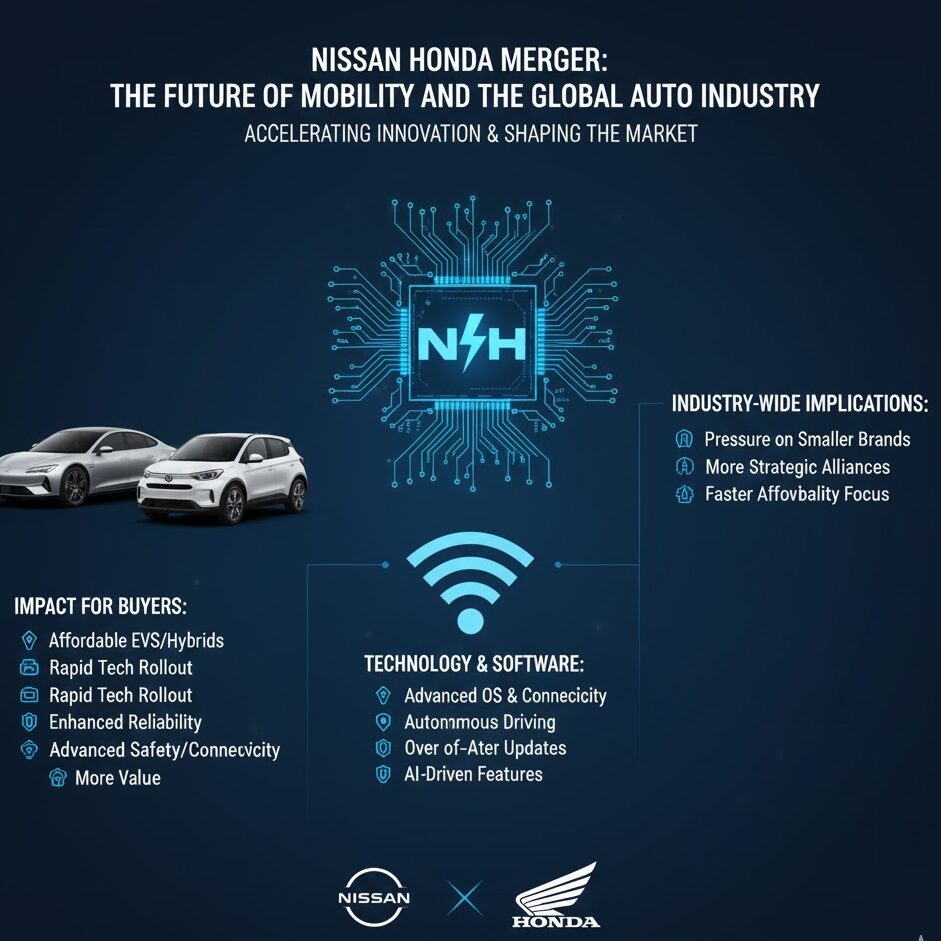
- More affordable electric and hybrid vehicles
- Faster rollout of new technologies
- Improved reliability through shared engineering
- Better safety and connectivity features
Possible Concerns
- Reduced brand individuality
- Fewer distinct models in certain segments
- Initial transition challenges
However, if managed carefully, the Nissan Honda Merger could enhance value rather than limit choice.
Technology, Software, and Future Mobility
Modern cars are no longer just mechanical machines. Software, connectivity, and automation are becoming central to vehicle performance and user experience.
A Nissan Honda Merger could strengthen:
- In-car operating systems
- Autonomous driving research
- Over-the-air updates
- AI-driven safety features
By pooling talent and data, both companies could compete more effectively with tech-driven automakers.
How This Merger Could Affect the Global Auto Industry
The automotive world is highly competitive, and a major merger often triggers ripple effects across the industry.
Industry-Wide Implications
- Increased pressure on smaller automakers
- More strategic alliances and partnerships
- Faster innovation cycles
- Greater focus on EV affordability
The Nissan Honda Merger could encourage other traditional brands to collaborate rather than compete alone.
Challenges and Risks of the Nissan Honda Merger
While the potential advantages are significant, mergers also come with risks.
Key Challenges to Watch
- Corporate culture differences
- Brand identity conflicts
- Integration of operations and leadership
- Regulatory approvals in global markets
Successful execution will depend on clear strategy, transparency, and long-term commitment from both companies.
What the Nissan Honda Merger Could Mean for the Future of Cars
Looking ahead, the Nissan Honda Merger could influence how cars are built, powered, and experienced.
Future possibilities include:
- More affordable EVs for mass markets
- Smarter, software-driven vehicles
- Faster transition to low-emission transportation
- Stronger competition against global EV leaders
For drivers, this could mean better cars at better prices, backed by proven engineering expertise.
Conclusion
The Nissan Honda Merger represents more than a business decision—it reflects the changing reality of the global automotive industry. As electrification, sustainability, and technology reshape mobility, collaboration may be the key to survival and success.
If executed well, the merger could accelerate innovation, lower costs, and deliver smarter, cleaner vehicles to consumers worldwide. At NexgenWheels, we see this development as a potential turning point that could redefine the future of cars for years to come.
FAQs: Nissan Honda Merger
1. What is the Nissan Honda Merger?
The Nissan Honda Merger refers to a potential strategic partnership or merger aimed at sharing technology, resources, and development efforts between the two automakers.
2. Why are Nissan and Honda considering a merger?
They are responding to rising EV development costs, global competition, and the need for faster innovation in electric and hybrid vehicles.
3. Will the Nissan Honda Merger affect electric cars?
Yes, it could lead to shared EV platforms, better battery technology, and more affordable electric vehicles.
4. How could this merger impact car prices?
Cost savings from shared manufacturing and development could help keep vehicle prices competitive.
5. Will Nissan and Honda remain separate brands?
While details may evolve, both brands are expected to maintain their identities while collaborating behind the scenes.
6. Is the Nissan Honda Merger good for consumers?
If managed well, it could result in better technology, improved reliability, and more value for car buyers.
For more information, please click the link below -:
How the Nissan Honda Merger Could Change Global Car Markets
