


The electric vehicle (EV) industry is moving faster than ever. Automakers are under pressure to deliver cleaner, smarter, and more affordable electric cars while competing with aggressive new players and meeting strict global emissions rules. In the middle of this transformation, news and discussions around the Honda and Nissan Merger have sparked widespread interest across the automotive world.
While both brands have long histories of innovation, their potential collaboration could represent a major shift in how electric vehicles are developed, produced, and sold. From battery technology and EV platforms to pricing and global reach, the Honda and Nissan Merger could significantly influence the future of electric mobility.
Why the Honda and Nissan Merger Matters Right Now
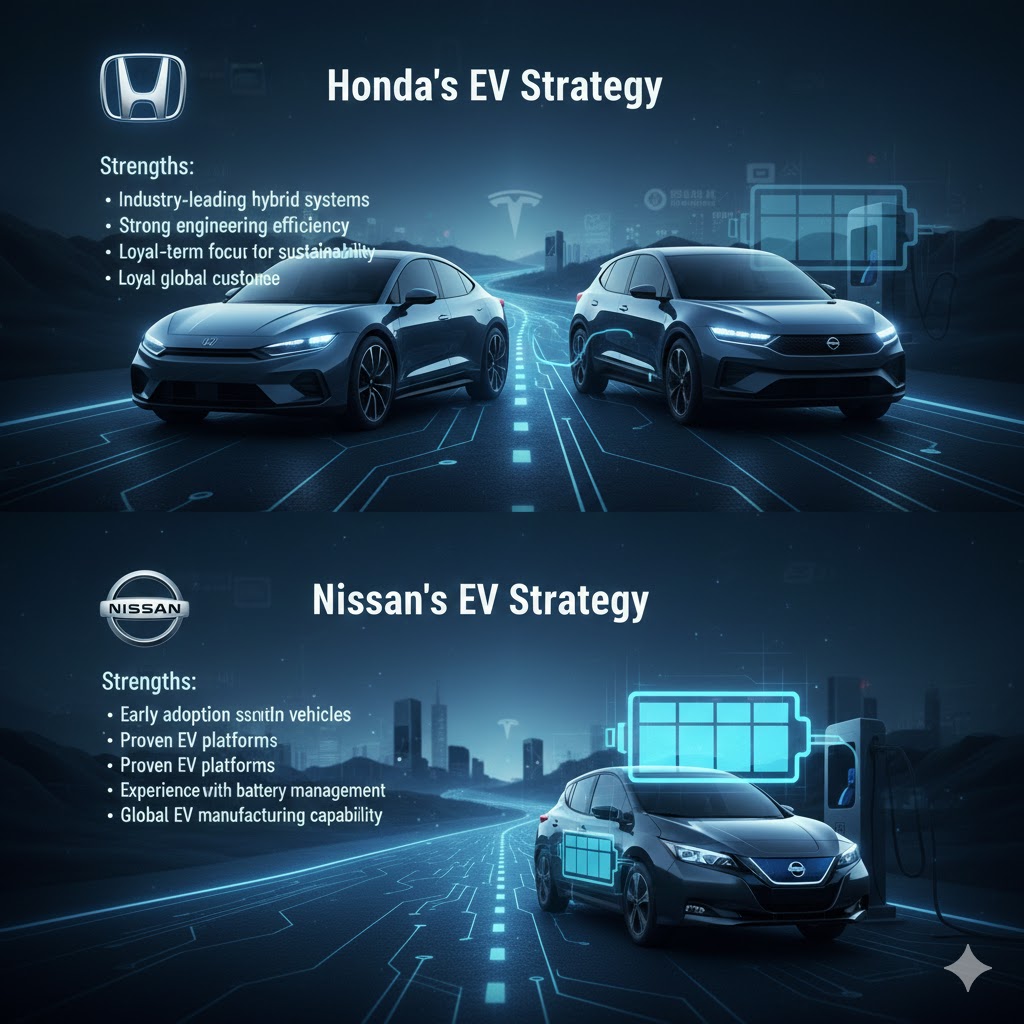
The timing of the Honda and Nissan Merger is critical. The automotive industry is facing challenges that no single company can easily solve alone.
Key Industry Pressures
- High costs of EV research and development
- Rapid advances in battery and charging technology
- Intense competition from Tesla and Chinese EV brands
- Supply chain and raw material constraints
- Rising consumer demand for affordable electric cars
By joining forces, Honda and Nissan could share risks, reduce costs, and accelerate innovation—especially in the electric vehicle segment.
Honda and Nissan: Two Different Paths to Electrification
Before understanding the impact of the merger, it’s important to look at how both companies currently approach electric vehicles.
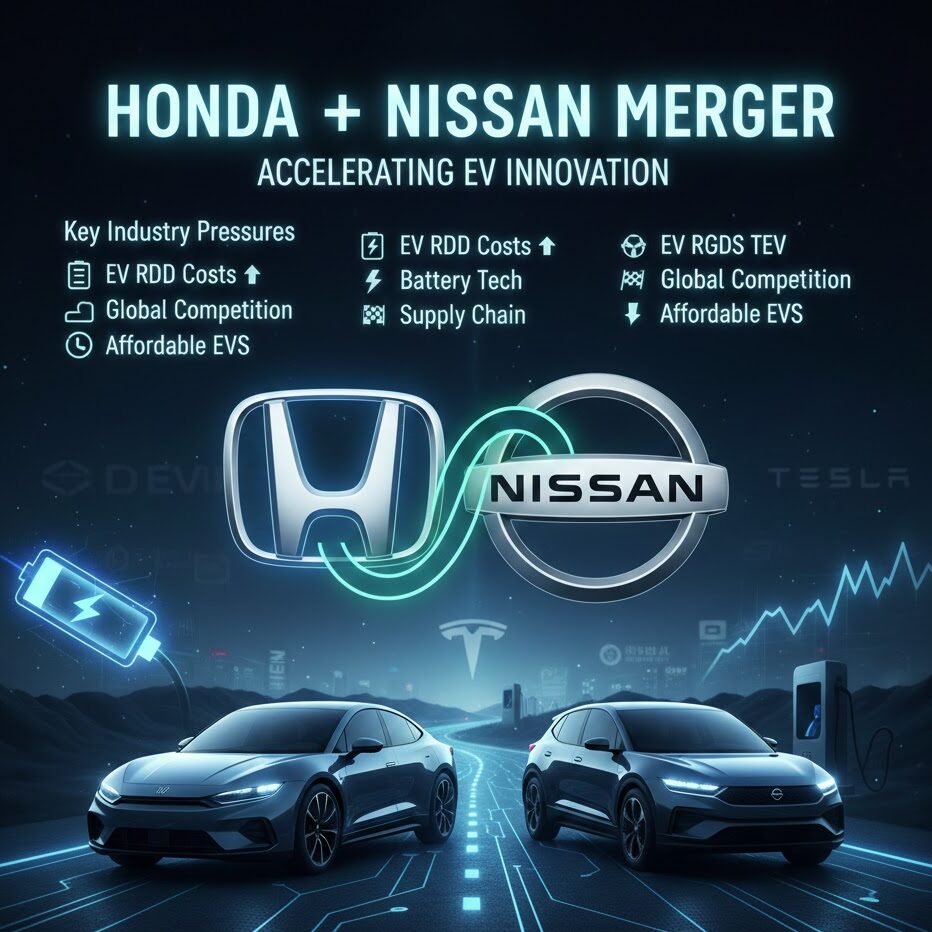
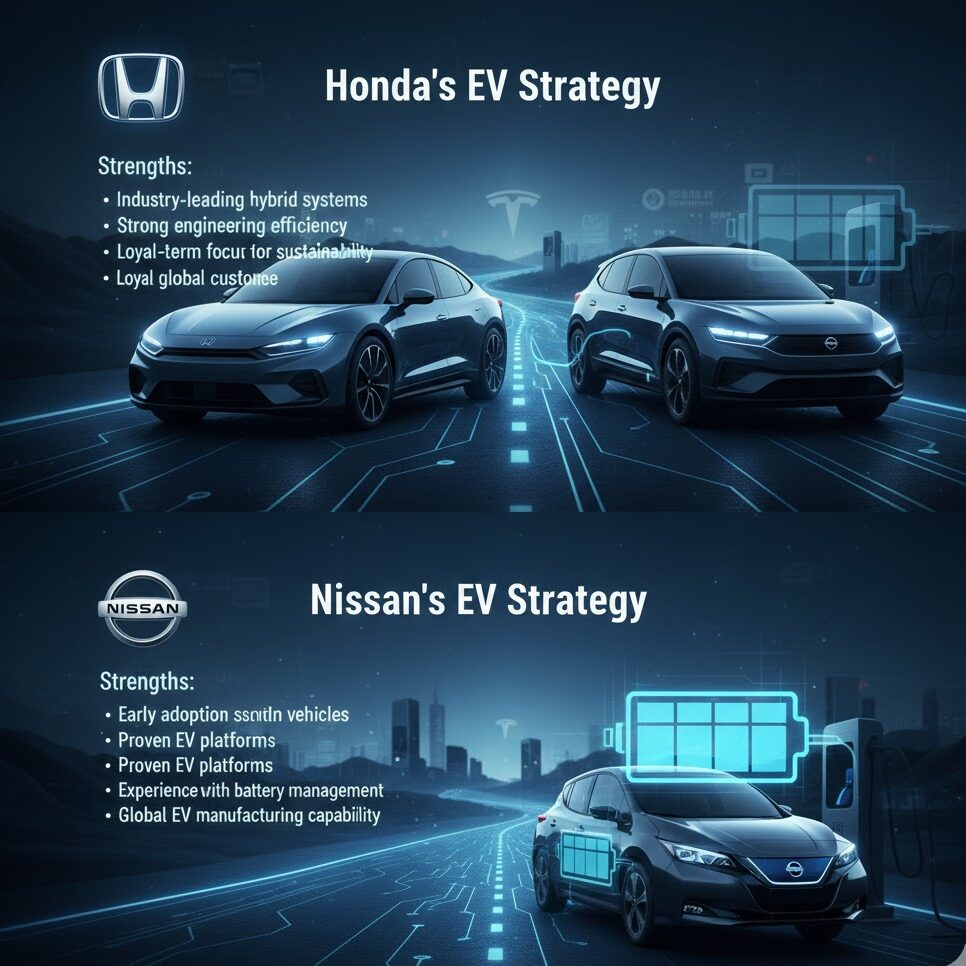
Honda’s EV Strategy
Honda has focused heavily on hybrids and efficiency-first engineering. Its electric strategy emphasizes reliability, smooth performance, and gradual electrification.
Honda’s strengths include:
- Industry-leading hybrid systems
- Strong engineering efficiency
- Long-term focus on sustainability
- Loyal global customer base
Nissan’s EV Strategy
Nissan is widely recognized as an early EV pioneer. It has practical experience with mass-market electric vehicles and large-scale EV production.
Nissan’s strengths include:
- Early adoption of electric vehicles
- Proven EV platforms
- Experience with battery management
- Global EV manufacturing capability
A Honda and Nissan Merger would bring these complementary strengths together.
How the Honda and Nissan Merger Could Improve EV Technology
One of the biggest advantages of the Honda and Nissan Merger would be shared research and development.
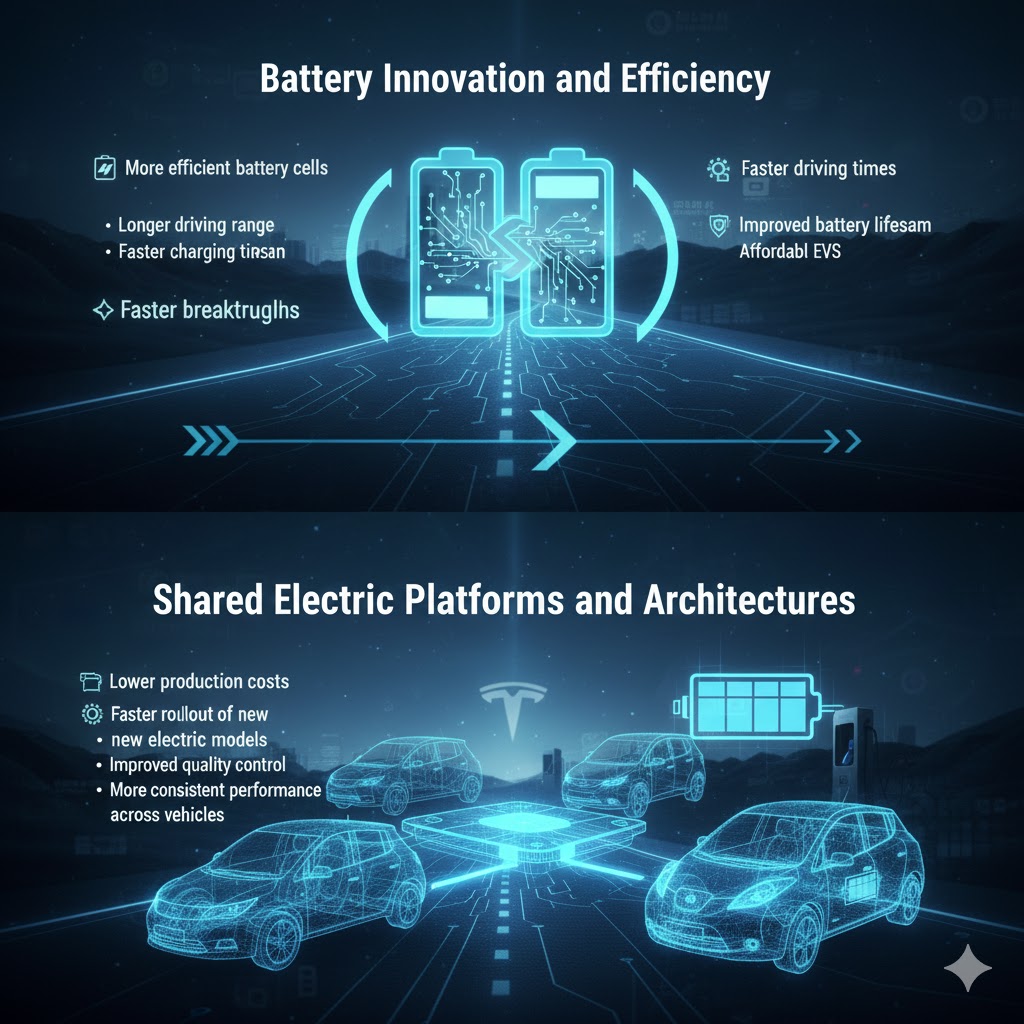
Battery Innovation and Efficiency
Battery technology is the heart of every electric vehicle. Joint development could lead to:
- More efficient battery cells
- Longer driving range
- Faster charging times
- Improved battery lifespan
By pooling resources, Honda and Nissan could speed up breakthroughs that might otherwise take years to achieve independently.
Shared Electric Platforms and Architectures
Developing a new EV platform is extremely expensive. A shared approach could reduce duplication and improve scalability.
Benefits of Shared EV Platforms
- Lower production costs
- Faster rollout of new electric models
- Improved quality control
- More consistent performance across vehicles
The Honda and Nissan Merger could result in flexible EV platforms used across multiple vehicle segments, from compact cars to SUVs.
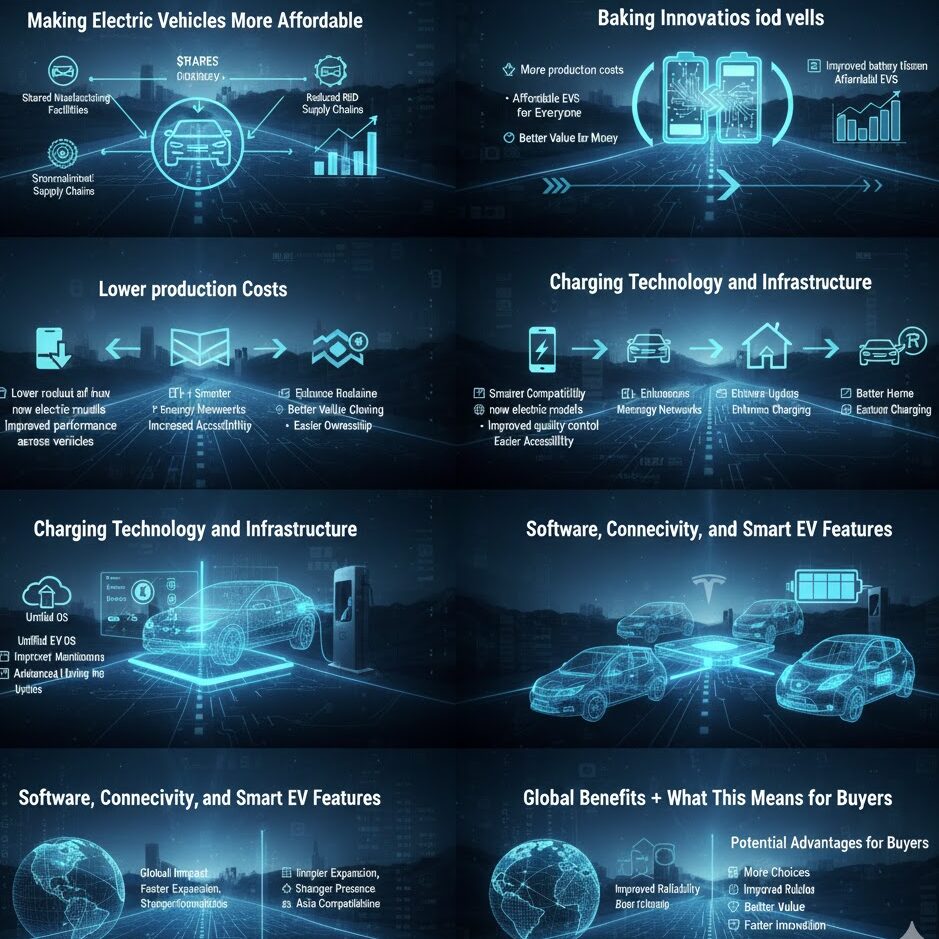
Making Electric Vehicles More Affordable
Affordability remains one of the biggest barriers to EV adoption. Many buyers want electric cars but are concerned about price.
How the Merger Could Lower EV Costs
- Shared manufacturing facilities
- Bulk sourcing of batteries and components
- Reduced R&D expenses
- Streamlined supply chains
These savings could be passed on to consumers, making electric vehicles more accessible to a wider audience.
Charging Technology and Infrastructure
Beyond the vehicle itself, charging plays a crucial role in EV adoption.
A combined Honda and Nissan approach could lead to:
- Improved charging compatibility
- Smarter energy management software
- Better integration with public charging networks
- Enhanced home charging solutions
This could make owning an electric vehicle easier and more practical for everyday drivers.
Software, Connectivity, and Smart EV Features
Modern electric vehicles rely heavily on software. From range optimization to driver assistance, digital systems are essential.
Potential Software Advantages
- Unified EV operating systems
- Faster over-the-air updates
- Improved battery monitoring
- Advanced driver-assistance features
The Honda and Nissan Merger could help both brands compete more effectively with software-focused EV manufacturers.
Impact on Global EV Markets
Both Honda and Nissan have strong international footprints. A merger could strengthen their position in key EV markets.
Global Benefits of the Merger
- Faster EV expansion in North America
- Stronger presence in Europe
- Increased competitiveness in Asia
- Better alignment with regional EV regulations
This global reach could help accelerate electric vehicle adoption worldwide.
What This Means for EV Buyers
For consumers, the Honda and Nissan Merger could translate into real-world benefits.
Potential Advantages for Buyers
- More electric vehicle choices
- Improved reliability and performance
- Better value for money
- Faster access to new EV technology
However, buyers may also watch closely to ensure both brands maintain their unique identities and design philosophies.
Challenges and Risks of the Honda and Nissan Merger
While the potential is strong, no merger is without challenges.
Key Risks to Consider
- Integration of different corporate cultures
- Brand differentiation concerns
- Coordination across global operations
- Regulatory approvals
The success of the merger will depend on careful planning and clear long-term goals.
How the Merger Could Shape the Future of Electric Vehicles
Looking ahead, the Honda and Nissan Merger could influence the direction of electric vehicles in meaningful ways.
Long-Term EV Impacts
- Faster transition to fully electric lineups
- Greater innovation in battery and motor design
- Wider availability of affordable EVs
- Stronger competition across the EV market
For the industry, this could signal a shift toward collaboration rather than isolated competition.
Why This Merger Could Be a Turning Point
The electric vehicle market is no longer experimental—it is mainstream. Automakers must move quickly, efficiently, and strategically.
The Honda and Nissan Merger represents:
- A response to industry-wide challenges
- A push toward faster EV innovation
- A commitment to sustainable mobility
Conclusion
The Honda and Nissan Merger could play a major role in shaping the future of electric vehicles. By combining Honda’s efficiency-driven engineering with Nissan’s EV experience, the partnership has the potential to accelerate innovation, reduce costs, and bring better electric cars to market faster.
For drivers, this could mean more affordable, reliable, and technologically advanced electric vehicles in the years ahead. As the EV race continues to heat up, collaborations like this may define who leads the next generation of mobility.
FAQs: Honda and Nissan Merger
1. What is the Honda and Nissan Merger about?
It refers to a potential strategic partnership focused on sharing technology, development, and resources, especially for electric vehicles.
2. How could the Honda and Nissan Merger affect electric cars?
It could lead to better battery technology, shared EV platforms, faster innovation, and more affordable electric vehicles.
3. Will Honda and Nissan remain separate brands?
Most likely, both brands will maintain their identities while collaborating behind the scenes on technology and production.
4. Could this merger reduce EV prices?
Yes, cost savings from shared development and manufacturing could help lower electric vehicle prices.
5. Is the merger mainly about electric vehicles?
Electric vehicles are a major focus, but the partnership could also impact hybrids, software, and future mobility solutions.
6. When could consumers see the impact of this merger?
If finalized, early benefits could appear within a few years as joint EV platforms and technologies are introduced.
Click the link below to read more about this blog :
How the honda and nissan merger Could Reshape the Auto Market
