

The shift toward cleaner, smarter, and more efficient mobility is accelerating faster than ever. Around the world, drivers are looking for ways to reduce emissions, cut long-term costs, and embrace modern technology. While many are choosing new Electric vehicles (EVs), a rapidly growing group of car owners is choosing something different and equally exciting—petrol to electric car conversion.
This innovative approach allows individuals to keep their beloved cars while transforming them into zero-emission vehicles. Instead of purchasing a brand-new EV, drivers can retrofit their existing petrol-powered vehicle with electric components, creating a unique blend of sustainability and personalization.
At Nexgenwheels, we believe in empowering individuals with knowledge, tools, and insights that support sustainable transportation. This comprehensive guide explains the complete conversion process, advantages, challenges, legal considerations, cost factors, and the future potential of petrol-to-electric conversions.
Whether you’re an automobile enthusiast, a DIY hobbyist, or someone exploring eco-friendly options, this guide covers everything you need to know about how to convert a petrol car to electric.
1. Understanding the Basics of Petrol to Electric Car Conversion
Before diving into the technical or legal aspects, it’s important to understand what petrol to electric car conversion actually means.
What Is Petrol to Electric Car Conversion?
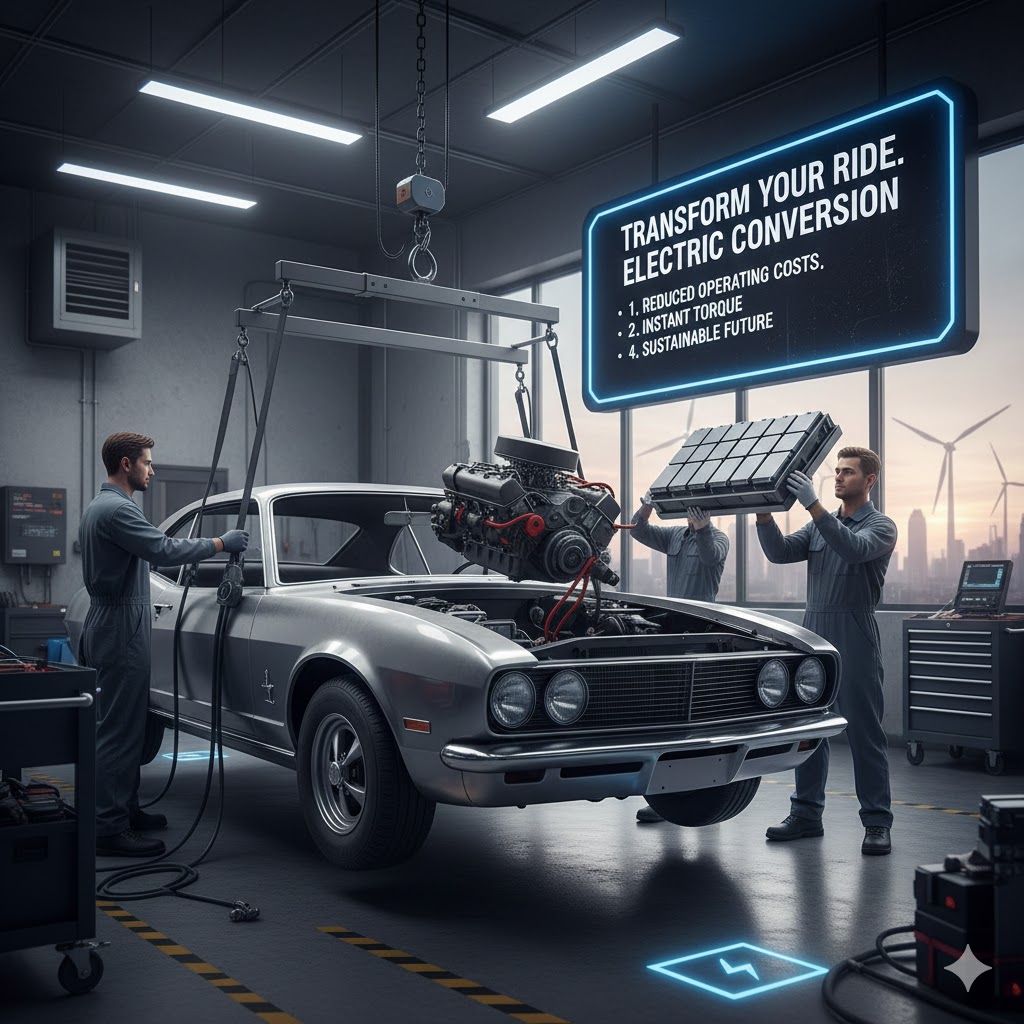
Petrol to electric conversion is the process of removing a vehicle’s internal combustion engine (ICE) and replacing it with an electric motor, battery pack, and supporting components. Essentially, you are transforming a fuel-driven car into one that runs purely on electricity.
This modification gives the vehicle the characteristics and benefits of an EV—quiet operation, instant torque, lower running costs, and zero tailpipe emissions.
Why Convert Your Petrol Car to Electric?
Here are the most notable advantages:
1. Environmental Benefits
Converting conventional petrol cars into zero-emission vehicles helps reduce air pollution and carbon footprint. EVs produce no tailpipe emissions, making them cleaner and more environmentally friendly.
2. Reduced Operating Costs
Electric cars require less maintenance because they have fewer moving parts. No oil changes, no exhaust repairs, and no fuel expenses—just efficient electric power.
3. Improved Driving Performance
Electric motors are known for delivering instant torque, resulting in quick acceleration and smoother ride quality. Many car owners are surprised at the performance boost after conversion.
4. Promote Sustainable Transportation
Repurposing an existing petrol car instead of buying a new one supports sustainable transportation. It reduces waste, minimizes manufacturing emissions, and gives old vehicles a modern life.
2. Key Challenges and Considerations Before Conversion
While the benefits are attractive, petrol to electric car conversion is not without challenges. Proper planning is essential.
1. High Initial Investment
The conversion process can be costly, depending on the quality of battery and electric motor components, wiring, controllers, and labor.
2. Range Limitations
Most aftermarket conversions offer a limited range compared to factory-built EVs. This depends heavily on the battery pack installed.
3. Technical Complexity
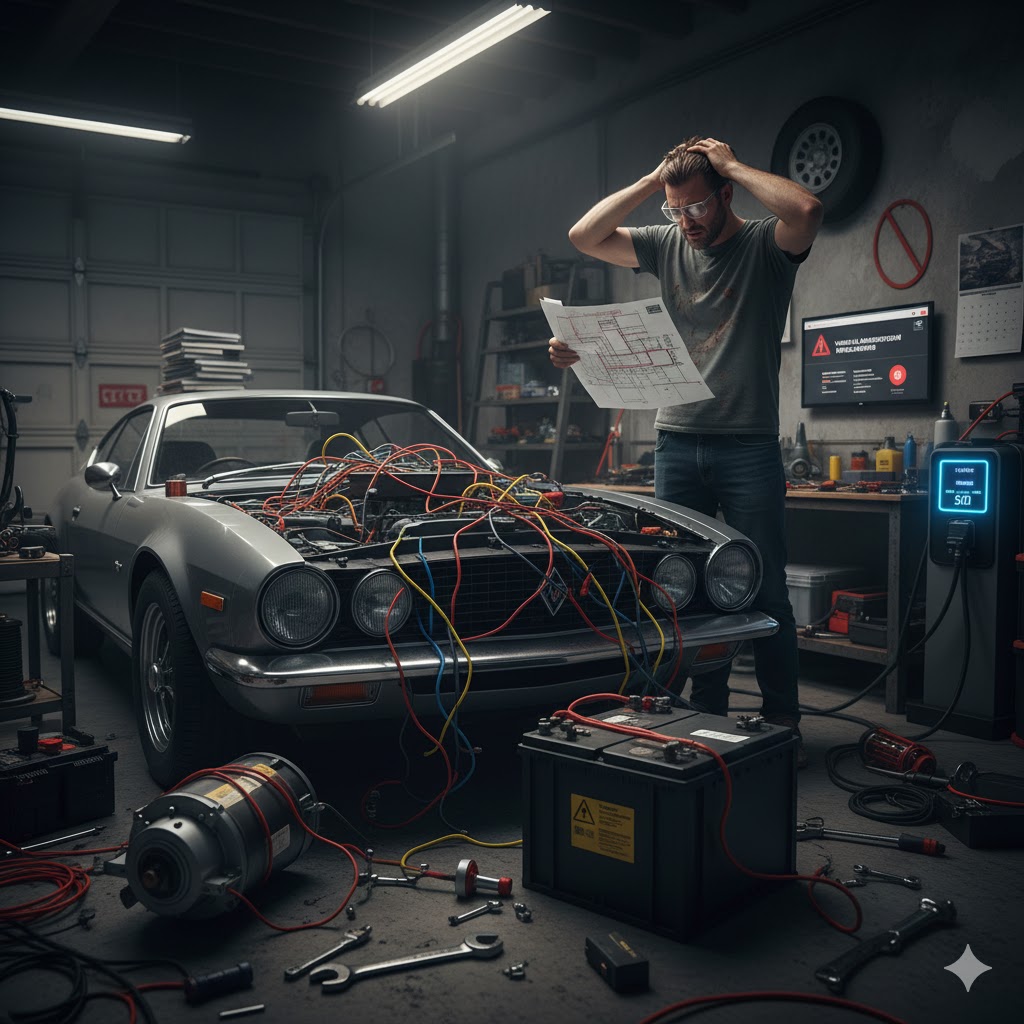
The conversion requires mechanical, electrical, and engineering expertise. Without the required knowledge, DIY conversions can be risky.
4. Legal and Regulatory Requirements
You must comply with local vehicle modification rules, certification processes, insurance updates, and safety inspections.
Understanding these considerations will help you plan effectively and avoid potential setbacks.
3. The Complete Conversion Process
Now let’s explore the full conversion process, step-by-step. This section is crucial for anyone planning to convert their petrol car to electric.
Step 1: Conducting a Vehicle Assessment
Not every petrol car is ideal for conversion. Important considerations include:
- Vehicle weight
- Age and body condition
- Chassis strength
- Space for battery placement
- Electrical compatibility
Compact and lightweight cars are generally easier and more cost-effective to convert.
Step 2: Gathering Essential Components
The heart of any petrol to electric car conversion is the selection of parts. The main battery and electric motor components you need include:
1. Electric Motor
This replaces the petrol engine and drives the wheels. Motor types include:
- DC motors
- AC induction motors
- Permanent magnet motors
AC motors are more efficient and commonly used in conversions.
2. Battery Pack
The battery acts as the fuel tank for your EV. Lithium-ion batteries are currently the best option due to reliability, charging speed, and energy density.
3. Motor Controller
This manages the flow of electricity between the battery and motor, controlling speed, torque, and performance.
4. Wiring and Electrical Systems
High-voltage wiring, fuses, connectors, and other components are required to complete the electrical link.
5. Charger and Charging Port
A built-in charger allows your converted EV to plug into charging stations.
6. Cooling System
Batteries and controllers generate heat; a cooling system ensures safe temperatures.
7. Adapter Plate
This connects the new electric motor to the car’s existing transmission.
Each component must be selected based on your car’s specifications and desired performance.
Step 3: Disassembling the Petrol Components
During this stage, remove:
- Petrol engine
- Fuel tank
- Exhaust system
- Radiator
- Spark plugs
- Oil system
- Starter motor
Clearing this space makes room for the EV components.
Step 4: Installing the Electric Motor and Battery System
This is the most detailed phase of the conversion process.
- Mount the electric motor to the transmission using an adapter plate.
- Secure the battery pack in multiple safe locations (e.g., trunk, underbody).
- Install the controller, charger, and wiring.
- Integrate the cooling and safety systems.
Step 5: Testing, Calibration & Safety Checks
Before hitting the road, complete:
- Electrical safety testing
- Battery performance calibration
- Motor calibration
- Range and performance testing
- Heat management testing
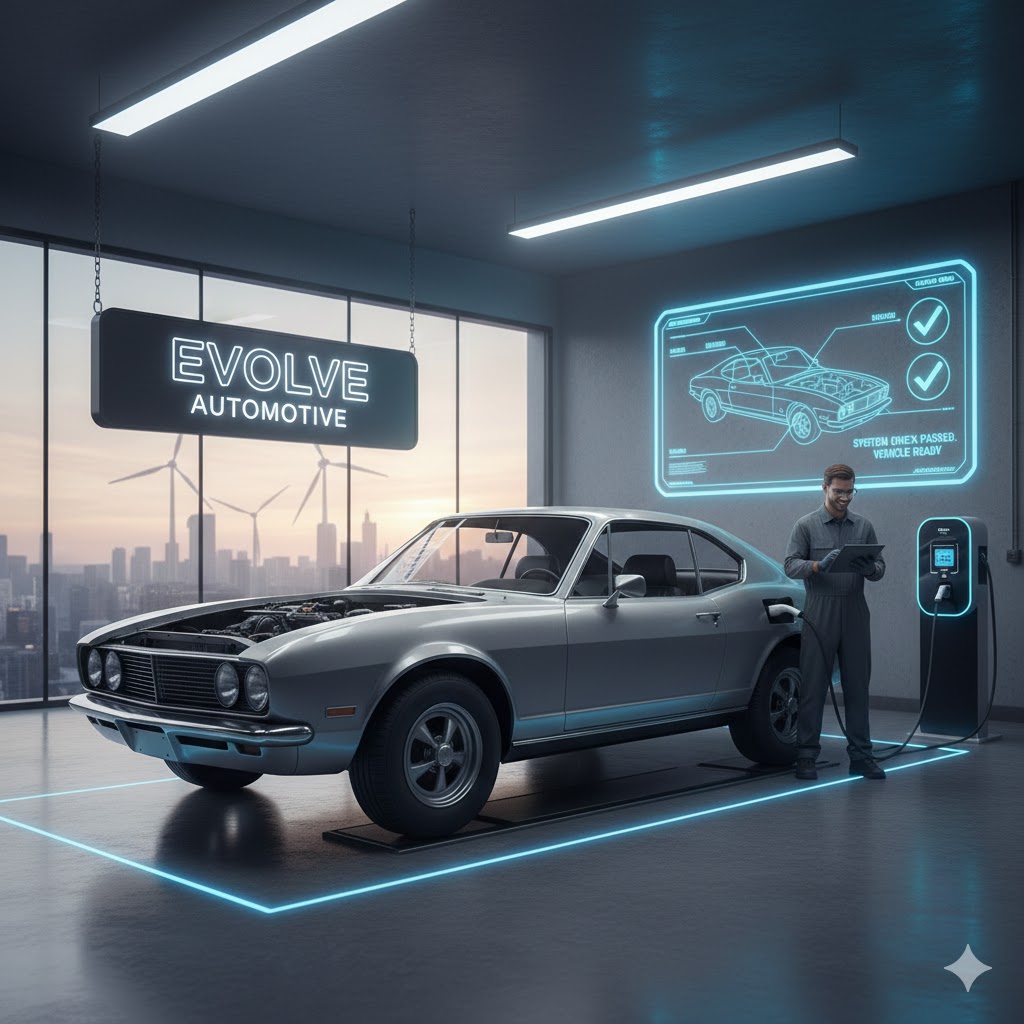
Finally, the vehicle undergoes inspection to ensure roadworthiness.
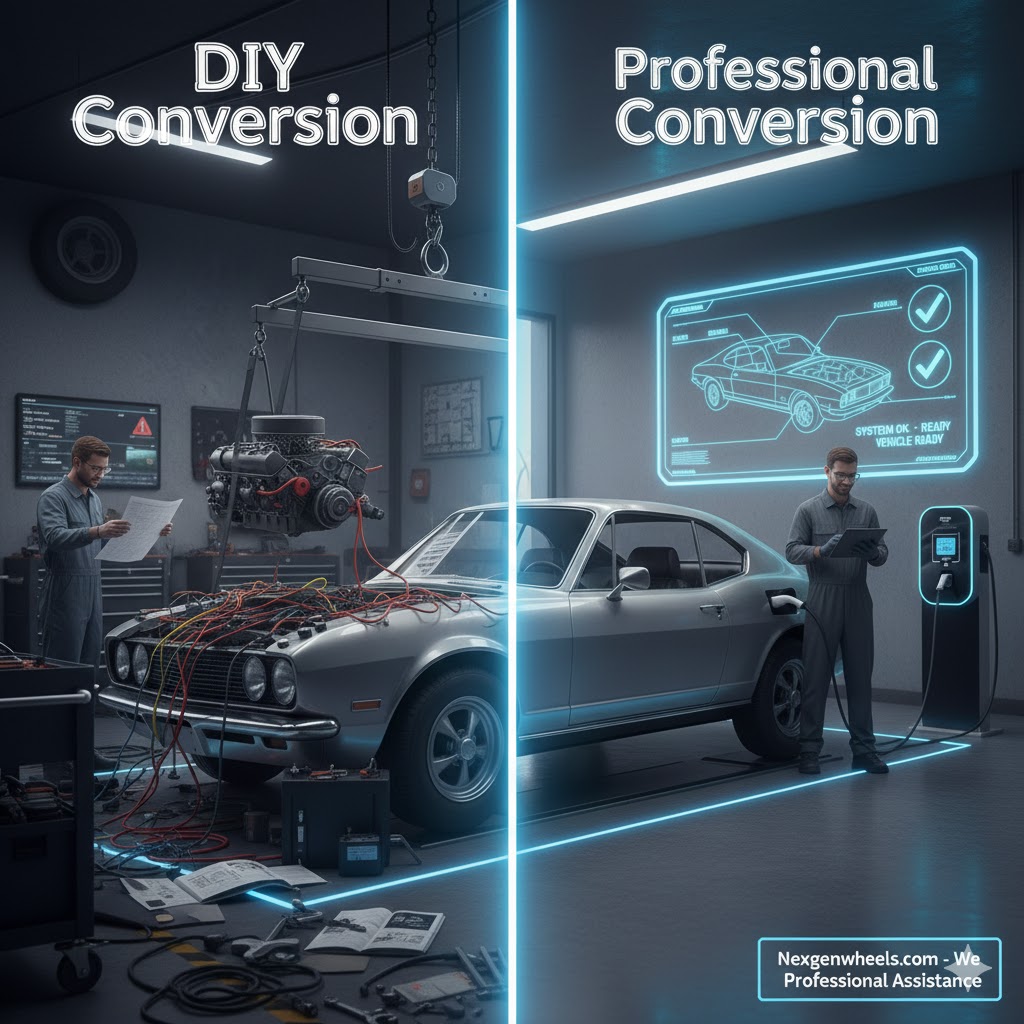
4. DIY vs. Professional Conversion—Which Is Better?
Many enthusiasts enjoy DIY conversions, but it requires:
- Technical expertise
- Tools and workshop space
- Time and patience
On the other hand, professional conversion services:
- Offer certified mechanics
- Provide reliable installation
- Ensure legal compliance
- Deliver higher-quality performance
At Nexgenwheels, we recommend professional assistance for most drivers, especially when dealing with high-voltage systems.
5. Legal and Regulatory Requirements
Compliance with local laws is essential for petrol to electric car conversion.
1. Certification & Approval
Every converted EV must undergo inspection to confirm it meets safety standards for zero-emission vehicles.
2. Insurance Updates
Inform your insurer about the vehicle modifications. Some companies even offer discounts for EVs.
3. Registration Changes
Your vehicle registration must be updated to reflect the new electric powertrain.
4. Emission Exemptions
Converted EVs may be exempt from pollution testing, depending on your location.
Always check local transport authority guidelines before starting your project.

Conclusion
Converting your petrol car to electric is one of the most meaningful steps toward sustainable transportation. By understanding the basics, preparing the right components, following a careful conversion process, and ensuring compliance with legal standards, you can successfully transform your existing vehicle into a clean, efficient, and modern EV.
Whether you’re motivated by environmental concerns, long-term savings, or the thrill of innovation, the shift to Electric vehicles (EVs) through conversion is a rewarding journey.
Nexgenwheels is here to help you navigate that journey with clarity, confidence, and expert guidance.
FAQs – How to Convert a Petrol Car to Electric
1. Is petrol to electric car conversion legal?
Yes, but you must comply with your region’s regulations, inspections, and certification requirements.
2. How long does the conversion process take?
A professional conversion typically takes 4–6 weeks, depending on the vehicle and components.
3. What is the average range of a converted EV?
Most conversions offer 80–150 miles, depending on the battery pack used.
4. Does conversion affect car insurance?
Yes. You must update your insurer, but many offer incentives for zero-emission vehicles.
5. Can any car be converted to electric?
Most lightweight petrol cars can be converted, but suitability depends on weight, chassis strength, and space for batteries.
